
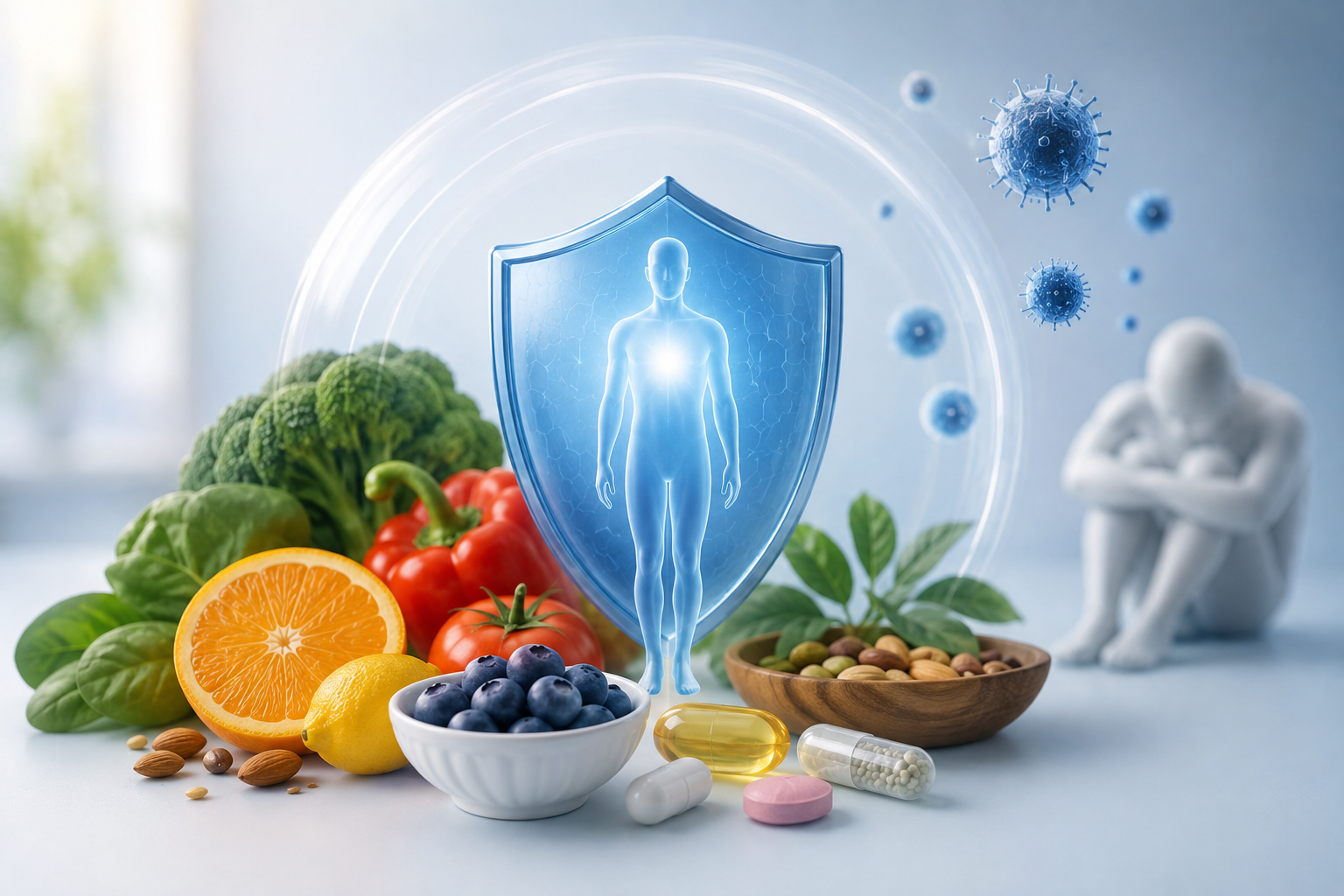
“Boost your immunity” is one of the most overused phrases in health marketing, and it's led a lot of people to either ignore nutrition entirely or over-correct with a cupboard full of supplements they don't actually need. The real picture is more specific and more useful: a handful of vitamins and minerals have a well-documented role in immune function, deficiency in any of them produces recognisable patterns, and figuring out which one (if any) applies to you is a testing question, not a guessing one.
The short version: vitamin D, C, zinc, vitamin A, the B-vitamins, and iron each play a specific, evidence-backed role in immune function. Deficiency in any of them can show up as frequent infections, slow healing, or persistent fatigue — but these symptoms overlap heavily with other conditions, which is exactly why guessing and supplementing blindly is less useful than testing first.
Why Micronutrients Matter for Immune Function
Your immune system isn't a single organ — it's a coordinated network of cells, signalling molecules, and physical barriers (like skin and mucous membranes), and nearly every part of that network depends on specific nutrients to function properly. Some vitamins help immune cells develop and multiply; others support the physical barriers that keep pathogens out in the first place; a few directly regulate how aggressively or calmly your immune system responds. A meaningful deficiency in any of these doesn't just affect one function — it can quietly reduce your body's overall ability to respond effectively.
Key Nutrients Linked to Immune Health
| Nutrient | Role in immune function | Deficiency signs | Food sources |
|---|---|---|---|
| Vitamin D | Helps regulate immune cell activity and inflammation | Fatigue, frequent infections, bone/muscle aches | Sunlight exposure, fortified milk, egg yolk, fatty fish |
| Vitamin C | Supports white blood cell function and skin barrier integrity | Slow wound healing, bleeding gums, easy bruising | Citrus fruits, amla, guava, bell peppers |
| Zinc | Directly involved in immune cell development and signalling | Frequent infections, poor wound healing, hair thinning | Legumes, nuts, seeds, dairy, meat |
| Vitamin A | Maintains the skin and mucosal barriers that block pathogens | Dry eyes, frequent respiratory infections | Carrots, sweet potato, spinach, dairy |
| B6, B12, folate | Support the production and function of immune cells | Fatigue, mouth ulcers, tingling in hands/feet (B12) | Legumes, dairy, eggs, leafy greens; B12 mainly in animal products |
| Iron | Needed for immune cell energy production and proliferation | Fatigue, pale skin, breathlessness on exertion | Lentils, leafy greens, meat, fortified cereals |
This is a general reference, not a checklist to self-diagnose from — several of these deficiency signs overlap with each other and with unrelated conditions.
Noticing fatigue, frequent infections, or slow healing?
A quick blood panel settles which nutrient, if any, is actually low — rather than guessing and buying supplements that may not be what your body needs.
Consult Dr. Yuvraj Monga confidentially for ₹2,000 to review your symptoms and order the right tests. Confirm current availability directly before booking.
Signs Your Body Might Be Telling You Something
A few patterns are worth paying attention to, though none of them point to one specific deficiency on their own:
- Getting sick more often than usual, or infections that take longer than expected to resolve
- Wounds or cuts that heal noticeably slower than before
- Persistent fatigue that isn't explained by sleep or stress
- Recurrent mouth ulcers or cracked skin at the corners of the mouth
- Unusual hair thinning or brittle nails
Any one of these, especially if it's new or persistent, is a reasonable reason to get checked — not because it definitely means a deficiency, but because it's the kind of pattern worth ruling in or out with an actual test.
Why Supplements Aren't a Blanket Solution
It's tempting to treat supplements as a low-risk way to cover your bases, but that's not quite accurate. Fat-soluble vitamins (A, D, E, K) can build up in the body and cause toxicity at high doses, unlike water-soluble vitamins that are more easily excreted. Excess zinc can interfere with copper absorption and, ironically, impair immune function rather than support it. Iron supplementation without a confirmed deficiency can cause its own problems and isn't something to start speculatively.
There's also a medication-interaction angle worth knowing: if you're taking any prescription medicine, including antiretroviral therapy, certain supplements can affect how well that medicine is absorbed or metabolised. This is a conversation to have with the doctor managing your treatment, not a decision to make from a supplement aisle.
Nutrition for People Managing HIV or Other Chronic Conditions
For people living with HIV, good nutrition genuinely matters — untreated or poorly managed HIV can affect appetite, absorption, and overall nutrient status, and deficiencies are more common in that context. But this needs to be stated clearly and accurately: nutrition and micronutrient support are a complement to antiretroviral therapy, never a substitute for it. No vitamin or mineral regimen controls HIV or replaces ART's role in maintaining viral suppression. If you're managing HIV and thinking about nutrition, that's a conversation to layer on top of your treatment plan with your prescribing doctor, not a separate decision made in isolation.
Getting Tested Rather Than Guessing
The most useful first step, if you suspect a deficiency, is a blood test rather than a supplement purchase. Common, informative tests include a vitamin D level, vitamin B12 and folate levels, ferritin/iron studies, and — less routinely, but sometimes relevant — zinc levels. A clinician can help decide which tests actually make sense for your symptoms and history, rather than ordering everything or nothing.
Practical, Food-First Steps
- Get sunlight exposure a few times a week, since this is a major source of vitamin D for most people.
- Build meals around a mix of legumes, dairy or fortified alternatives, vegetables, and whole grains rather than relying on any single “superfood.”
- If you eat a fully plant-based diet, pay particular attention to B12, which is difficult to get from plant sources alone and may need supplementation with guidance.
- Treat supplements as a targeted fix for a confirmed gap, not a general insurance policy taken indefinitely without a reason.
The Bottom Line
Yes, you can absolutely have an STI without any symptoms — for several common infections, that's closer to the norm than the exception. Feeling well is good information about your general health, but it's not a substitute for knowing your status. The more useful habit isn't watching for symptoms; it's testing on a schedule that matches your actual exposure, regardless of how you feel on any given day.
Get an actual answer, not a guess
Book a confidential consultation with Dr. Yuvraj Monga to review your symptoms, order the right nutrient panel, and get guidance that fits your specific health picture — including if you're managing HIV or on ART.
₹2,000 consultation fee · All-India medicine delivery when needed. Confirm current availability and coverage directly before booking.
This article is educational and general in nature. It is not a diagnosis, prescription, or a substitute for an individual consultation. Nutrition and supplements should never replace prescribed medical treatment, including antiretroviral therapy. Speak with a qualified clinician before starting any new supplement, especially if you take other medication.