
Traveling Abroad and HIV Exposure: What to Do If It Happens While Traveling
Travel opens us to extraordinary experiences - new cultures, new connections, and sometimes, new risks. When a potential HIV exposure occurs while you are far from home, the 72-hour window does not pause. Whether you are in Dubai, Singapore, London, Bangkok, or a remote corner of Southeast Asia, the medical imperative is the same: access PEP as quickly as possible.
This guide is for Indian travelers who find themselves needing HIV prevention guidance while abroad. The good news is that with the right knowledge and some planning, accessing PEP while traveling is achievable in most parts of the world - and for those returning home to India, remote consultation and rapid delivery options are now available.
Step 1: Recognize the 72-Hour Window Immediately
The moment you identify a potential exposure, your clock starts. The 72-hour window is the same everywhere in the world. Do not lose hours to denial, embarrassment, or hoping the situation will resolve itself. The single most important thing you can do is acknowledge the potential risk and start seeking PEP immediately.
Set an alarm on your phone for 72 hours from the time of exposure. This is your hard deadline. Everything else in this guide needs to happen before that alarm goes off.
Step 2: Find a Hospital or Clinic Abroad
In most countries, particularly urban areas, PEP is accessible through hospital emergency departments or sexual health clinics. Here is how to find one quickly:
- Go to the nearest large hospital emergency department and ask specifically for PEP for HIV exposure. Use the words "HIV post-exposure prophylaxis" - most emergency physicians globally will understand this
- In many countries (UK, US, Australia, Singapore, UAE, Thailand, etc.), HIV clinics or sexual health clinics are specialized facilities that handle PEP efficiently. A quick internet search for "HIV clinic near me" or "sexual health clinic" in your location should identify options
- Contact your travel insurance provider immediately - most comprehensive travel insurance policies cover emergency medical care, and a PEP prescription absolutely qualifies as emergency medical care
- Indian Embassy/Consulate: If you are struggling to navigate a foreign healthcare system, the Indian Embassy or consulate in your country of travel can sometimes assist with medical referrals
Step 3: What to Say at a Foreign Hospital
Be direct and clear. Tell the doctor: "I have had a potential HIV exposure within the last [X] hours and I need to start post-exposure prophylaxis (PEP)." You do not need to provide detailed explanations of the circumstances unless you choose to. A responsible emergency physician will respond to this clearly stated need without requiring you to justify yourself.
You may be asked to sign consent forms and provide payment or travel insurance details. Have your passport, travel insurance card, and credit card ready.
Step 4: What If You Cannot Access PEP Abroad?
In some destinations - particularly smaller towns or countries with limited healthcare infrastructure - accessing PEP locally may be difficult. In this situation, the options are:
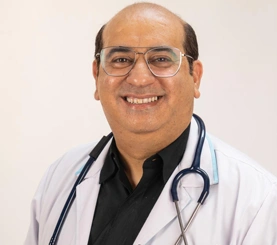
- If you are returning to India within the 72-hour window: Contact Dr. Yuvraj Monga immediately via WhatsApp (+91 9999219128). A prescription can be issued and medication arranged for pick-up or delivery the moment you land. Coordinate so that you can access medication within hours of arriving in India.
- Emergency travel to a larger city: If you are near a major hub airport and the 72-hour window allows, traveling to the nearest large city where PEP is accessible may be worthwhile.
- International telehealth services: Some international telehealth platforms can provide PEP prescriptions that can be filled at local pharmacies in many countries.
Managing PEP While Continuing Your Travel
If you start PEP abroad and are continuing your trip, you need to manage the 28-day medication course across your remaining travel. Key considerations:
- Keep medication in your carry-on luggage, never checked baggage
- Carry a letter from your prescribing doctor explaining the medication - useful for customs in countries with strict drug import rules
- Research whether your specific PEP medication is legal to carry into subsequent countries on your itinerary
- Set daily phone reminders to take your medication at the same time every day - consistency is essential
- Arrange for a supply large enough to cover your remaining travel dates
After Returning to India
Once you return home, follow up with a specialist like Dr. Yuvraj Monga to complete your PEP course under proper medical supervision. You will need HIV testing at 45 days and 90 days post-exposure, regardless of where you received your PEP prescription. Do not skip these follow-up tests - they confirm your final HIV status with certainty.
Back in India and Need PEP? Act Now.
Whether you just landed or are still abroad, Dr. Yuvraj Monga can provide emergency consultation and arrange PEP delivery across India within 12-24 hours.
Consult Dr. Yuvraj Monga: WhatsApp +91 9999219128 immediately. Time is critical.