
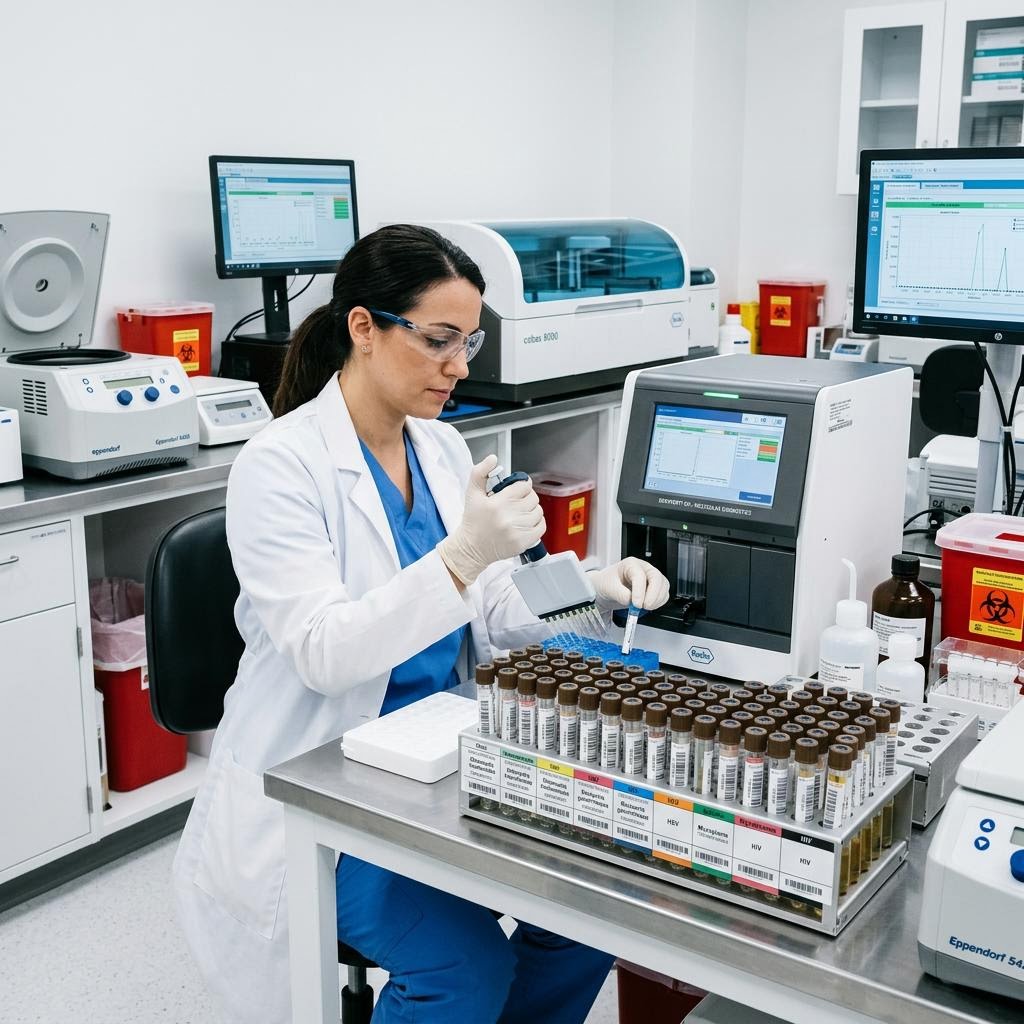
The Case for Comprehensive STI Testing
When people think about STI testing, they often focus on HIV alone. But sexually transmitted infections rarely exist in isolation. HIV, syphilis, hepatitis B, and hepatitis C share transmission routes, risk factors, and often occur together as co-infections.
Getting tested for all of these together-rather than just HIV-is medically smart, cost-effective, and provides a complete picture of your sexual health.
Why These Infections Often Occur Together
Shared Transmission Routes
HIV, syphilis, hepatitis B, and hepatitis C are all bloodborne or sexually transmitted infections. They spread through:
- Unprotected vaginal, anal, or oral sex
- Sharing needles or injection equipment
- Blood exposure (needlestick injuries, contaminated medical equipment)
- Mother-to-child transmission during pregnancy or birth
If you've been exposed to one, there's a reasonable chance you've been exposed to others.
Biological Interactions
These infections interact with each other in ways that increase transmission risk and worsen outcomes:
Syphilis increases HIV acquisition risk. The open sores caused by syphilis provide an entry point for HIV. People with untreated syphilis are 2-5 times more likely to acquire HIV if exposed.
HIV accelerates syphilis progression. In people living with HIV, syphilis can progress more rapidly and cause more severe complications, including neurological damage.
Hepatitis B and HIV co-infection. About 10% of people living with HIV also have chronic hepatitis B. Co-infection can accelerate liver disease and complicate treatment.
Hepatitis C and HIV co-infection. HIV weakens the immune system's ability to clear hepatitis C, leading to faster progression to cirrhosis and liver failure.
Individual Infections: What You Need to Know
HIV
HIV attacks the immune system, specifically CD4 T-cells. Left untreated, it progresses to AIDS. With modern antiretroviral therapy, people with HIV live near-normal lifespans and can achieve undetectable viral loads (meaning they cannot sexually transmit HIV).
Testing window: 2-6 weeks for most tests, with confirmatory testing at 3 months for conclusive results.
Symptoms: Acute HIV (within 2-4 weeks of infection) may cause flu-like illness: fever, rash, swollen lymph nodes, sore throat. Many people have no symptoms.
Syphilis
Syphilis is a bacterial infection caused by Treponema pallidum. It progresses through stages if untreated: primary (chancre sore), secondary (rash, flu-like symptoms), latent (no symptoms), and tertiary (severe organ damage, neurological symptoms).
Testing window: 3-6 weeks after exposure for antibodies to appear.
Symptoms: Painless sore (chancre) at infection site, rash on palms/soles, fever, swollen lymph nodes. Can be asymptomatic.
Treatment: Curable with penicillin injections.
Hepatitis B
Hepatitis B is a viral infection that attacks the liver. It can cause acute infection (short-term illness) or chronic infection (lifelong). Chronic hepatitis B can lead to cirrhosis, liver failure, or liver cancer.
Testing window: 4-6 weeks for surface antigen (HBsAg) to appear.
Symptoms: Jaundice (yellowing of skin/eyes), dark urine, fatigue, abdominal pain, nausea. Many people have no symptoms during acute infection.
Prevention: Vaccine available and highly effective. All individuals at risk should be vaccinated.
Treatment: No cure, but antiviral medications can control chronic infection and prevent liver damage.
Hepatitis C
Hepatitis C is a viral liver infection. About 75-85% of acute infections become chronic. Chronic hepatitis C can cause cirrhosis, liver failure, and liver cancer.
Testing window: 4-10 weeks for antibodies, RNA testing can detect earlier.
Symptoms: Often asymptomatic until liver damage is advanced. Fatigue, jaundice, dark urine, abdominal pain when symptomatic.
Treatment: Curable with direct-acting antivirals (DAAs), typically 8-12 weeks of treatment with >95% cure rate.
Benefits of Comprehensive Testing
1. Early Detection and Treatment
Many of these infections are asymptomatic in early stages. Testing catches them before serious complications develop. Early syphilis is easily curable. Early hepatitis C treatment prevents liver damage. Early HIV treatment leads to better long-term outcomes and prevents transmission.
2. Prevents Complications from Co-Infections
If you test positive for one infection and don't know about another, treatment can be less effective or complications more severe. For example, treating HIV without knowing about hepatitis B can lead to hepatitis flares when certain medications are stopped.
3. Informs Treatment Decisions
Knowing your full STI profile helps your healthcare provider choose the safest, most effective medications. Some HIV medications also treat hepatitis B. Some antibiotics interact with antiviral drugs.
4. Comprehensive Prevention Planning
If you're negative for all infections, this is the perfect time to discuss prevention strategies: PrEP for HIV, hepatitis B vaccination, safer sex practices, and harm reduction for injection drug use.
5. Peace of Mind
Testing for multiple infections at once provides complete reassurance. You're not left wondering, "What if I only tested for HIV but missed something else?"
Who Should Get Comprehensive Testing?
The following groups benefit most from testing for HIV, syphilis, hepatitis B, and hepatitis C together:
- Anyone with a recent potential exposure (unprotected sex, needlestick, shared needles)
- People starting PrEP or PEP (comprehensive baseline testing is required)
- Individuals with multiple sexual partners
- Men who have sex with men (MSM)
- People who inject drugs
- Sex workers and their clients
- People in serodiscordant relationships
- Pregnant individuals (recommended as part of prenatal care)
- Anyone diagnosed with one STI (testing for others is prudent)
- Individuals with unexplained symptoms: fatigue, rash, jaundice, swollen lymph nodes, fever
The Testing Process
Comprehensive STI testing is straightforward and usually involves a single blood draw:
HIV: 4th generation antigen/antibody test (detects earlier) or rapid test
Syphilis: RPR (Rapid Plasma Reagin) or VDRL, followed by confirmatory treponemal test if positive
Hepatitis B: HBsAg (surface antigen) for active infection, anti-HBs to check immunity from vaccination or past infection
Hepatitis C: Anti-HCV antibody test, followed by HCV RNA if positive (confirms active infection)
All tests are done from the same blood sample. Results typically available within 24-72 hours (rapid HIV tests provide results in 20 minutes).
Cost and Accessibility in India
Comprehensive STI testing is affordable in India, especially through private providers. Costs typically range from ₹3,000-₹6,000 for the full panel, depending on location and lab.
Government facilities and some NGOs offer free HIV and syphilis testing, though hepatitis testing may not be included.
Dr. Yuvraj Monga's practice offers complete STI panels as part of sexual health consultations, with coordination for home sample collection in many areas for privacy and convenience.
Interpreting Results
All Tests Negative
Good news! You're currently free of these infections. Discuss prevention strategies with your provider: PrEP, hepatitis B vaccination, safer sex practices, and regular testing if you have ongoing risk.
One or More Tests Positive
A positive result is not the end-it's the beginning of treatment and management. Modern medicine has transformed all of these infections from life-threatening to manageable or curable.
HIV: Start antiretroviral therapy (ART), achieve viral suppression, live a near-normal lifespan.
Syphilis: Curable with penicillin. Follow-up testing ensures clearance.
Hepatitis B: Chronic infection managed with antivirals, regular monitoring prevents complications.
Hepatitis C: Curable with 8-12 weeks of direct-acting antivirals.
What If You're Diagnosed with Multiple Infections?
Co-infection requires coordinated care but is absolutely manageable. Your healthcare provider will:
- Prioritize treatment based on urgency (e.g., syphilis is treated immediately)
- Choose medications that address multiple infections when possible
- Monitor for drug interactions and liver function
- Provide counseling and support for managing multiple diagnoses
People with HIV-hepatitis co-infections, for example, are successfully treated every day with excellent outcomes.
Stigma and Confidentiality
Fear of judgment prevents many people from getting comprehensive testing. Know this: healthcare providers see these infections daily. Testing is routine medical care, not a moral evaluation.
Dr. Yuvraj Monga's practice provides 100% confidential testing with discreet result delivery. No one-family, employer, insurance-will know unless you choose to share.
Final Thoughts
Your sexual health is multifaceted. HIV testing alone provides an incomplete picture. Comprehensive testing for HIV, syphilis, hepatitis B, and hepatitis C together ensures you catch any infections early, access treatment promptly, and protect your long-term health.
These tests are simple, affordable, and can be life-changing. If you've had a potential exposure or are at ongoing risk, don't just test for HIV-get the full picture.
Your health is worth the complete story.