
Quick Summary
- Saliva tests detect HIV antibodies, not the virus itself, requiring a longer window period (23-90 days).
- In 2026, oral tests like OraQuick offer ~99.3% sensitivity for established infections.
- 4th-generation blood tests remain superior for early detection and confirmation.
- Any positive result from a home test must be confirmed with a laboratory blood test.
Understanding Saliva-Based HIV Testing
In recent years, at-home HIV testing has become increasingly accessible, offering privacy and convenience for individuals seeking to know their status. Among the most popular options are saliva-based tests, commonly referred to as oral fluid tests. But how do these tests work, and more importantly, how accurate are they as we navigate the medical landscape of 2026?
Unlike blood tests that look for both antigens (the virus itself) and antibodies (the body's response), saliva-based tests primarily look for HIV antibodies. When a person is infected with HIV, their immune system eventually produces antibodies to fight the virus. These antibodies are present in oral transudate-the fluid found between the gums and teeth.
The Science: How Do Oral Fluid Tests Work?
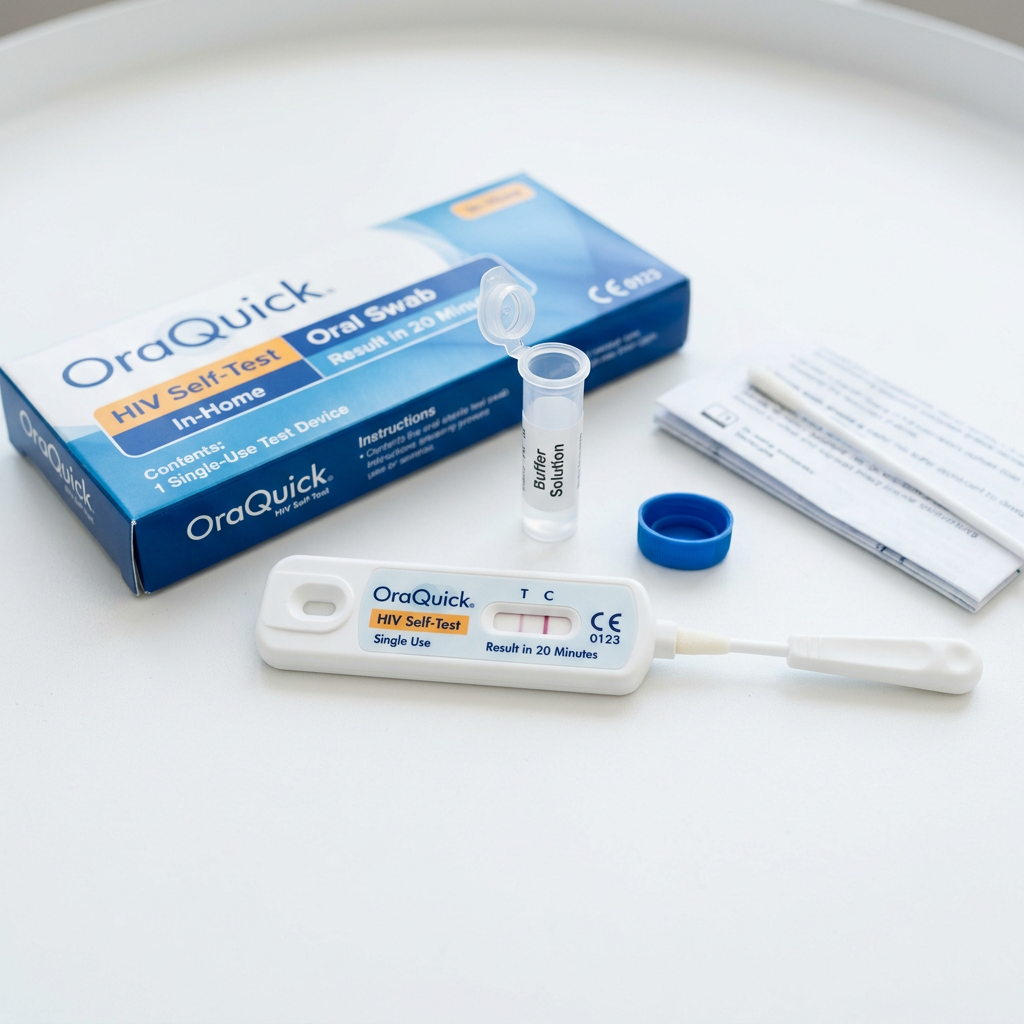
Tests like the OraQuick Advance rely on a simple swab of the upper and lower gums. The swab collects the oral fluid, which is then inserted into a vial containing a developer solution. The device uses lateral flow technology, similar to a pregnancy test. If HIV antibodies are present in the fluid, they bind to specific antigens on the test strip, causing a visible line to appear.
It is crucial to understand that these tests do not detect HIV in the saliva itself-HIV is not transmitted through saliva. Instead, they detect the body's immune response to the virus.
Accuracy Rates in 2026
When discussing the accuracy of any diagnostic test, medical professionals look at two key metrics: sensitivity and specificity.
- Sensitivity: The ability of the test to correctly identify those with the disease (true positive rate).
- Specificity: The ability of the test to correctly identify those without the disease (true negative rate).
In 2026, clinical data shows that FDA-approved saliva-based HIV tests boast an impressive specificity of approximately 99.8%. This means false positives are exceedingly rare. However, the sensitivity sits around 92% to 99.3%, depending on how long the individual has been infected. While this is highly accurate for established infections, it highlights a critical limitation regarding the "window period."
The Critical Window Period
The window period is the time between potential exposure to HIV and when a test can accurately detect the infection. Because oral fluid tests rely solely on antibodies, they have a longer window period than modern blood tests.
For saliva tests, the window period typically ranges from 23 to 90 days. If you test within this window, your body may not have produced enough antibodies to be detected in oral fluid, leading to a false negative. If you had a high-risk exposure within the last 72 hours, a saliva test is completely ineffective for immediate diagnosis-you need emergency PEP (Post-Exposure Prophylaxis) consultation immediately.
Saliva Tests vs. 4th-Generation Blood Tests
While saliva tests are convenient, 4th-generation blood tests remain the gold standard in clinical settings. These lab-based tests detect both HIV antibodies and the p24 antigen (a protein that makes up most of the viral core). Because the p24 antigen spikes shortly after infection-before antibodies are fully developed-4th-generation tests can detect HIV much earlier, typically within 18 to 45 days.
When to choose a saliva test: Routine screening for individuals without recent high-risk exposures who value the privacy and convenience of home testing.
When to choose a blood test: Recent high-risk exposures, confirmation of a positive home test, or when seeking the most accurate and early diagnostic results.
Understanding False Positives and Negatives
A false negative usually occurs because the test was taken too early during the window period. A false positive, while rare, can happen due to user error, cross-reactivity with other antibodies, or test malfunction. This is why medical guidelines universally mandate that any positive result from a rapid or at-home test must be followed up with a confirmatory laboratory blood test.
Step-by-Step: Using an At-Home Oral Test
- Do not eat, drink, or use oral care products (like mouthwash) for at least 30 minutes before testing.
- Remove the test swab from the packaging without touching the pad.
- Firmly swipe the pad along your upper gums once, and your lower gums once.
- Insert the swab into the provided developer vial.
- Wait the required time (usually 20 minutes) but do not read the results after the maximum time limit (usually 40 minutes).
Next Steps After a Result
If your result is negative and you are past the 90-day window period, you are likely HIV-negative. If you engage in high-risk behaviors, consider discussing PrEP (Pre-Exposure Prophylaxis) with a specialist.
If your result is positive, do not panic. Stay calm and immediately seek professional medical confirmation. A positive home test is preliminary.
Concerned About Your HIV Risk?
Get a confidential consultation, expert testing, and immediate guidance. 100% private care tailored to your needs.
Book Consultation