
Rural vs Urban Access to PEP: Bridging the Healthcare Gap
If you live in Delhi, Mumbai, Bengaluru, or any other major Indian city, accessing PEP after a potential HIV exposure is challenging but manageable. A private specialist is a WhatsApp message away. Government ART centers are within reasonable distance. Pharmacies can fulfill prescriptions within hours. The 72-hour window, while tight, is achievable.
If you live in a village in rural Rajasthan, Jharkhand, Uttar Pradesh, or Odisha, the same 72-hour window is a far more severe challenge. The nearest ART center may be four hours away by bus. The district hospital may not stock PEP medications consistently. A private specialist may not be accessible at all. The healthcare geography of India creates a profound inequality in who can actually benefit from PEP as a life-saving intervention.
This article examines the rural-urban PEP access gap honestly, explains what resources do exist in rural settings, and describes how teleconsultation with home delivery is changing the equation for rural patients across India.
The Urban PEP Landscape: What Access Looks Like in Cities
In India's major cities, a patient who has had a potential HIV exposure has several realistic pathways to PEP within the 72-hour window:
- Government medical college hospitals with infectious disease departments and on-site ART centers
- Private hospital emergency departments familiar with HIV PEP protocols
- Private infectious disease specialists reachable by phone or WhatsApp
- Pharmacies that stock or can rapidly source antiretroviral medications
- NGOs operating sexual health clinics in metro areas
- Same-day or next-day home delivery of medications ordered through teleconsultation
Even in cities, patients face barriers - stigma, cost, navigating bureaucratic systems under stress. But the physical availability of PEP is generally not the primary obstacle in urban settings.
The Rural PEP Reality: Structural Barriers
For rural patients, the barriers to PEP access are often structural and systemic rather than just informational:
- Distance to ART centers: India has approximately 700 ART centers, most attached to district hospitals. With India's 640,000 villages and significant rural population, many patients are 50-200 kilometers from the nearest ART center. A journey of several hours each way while anxious, potentially symptomatic, and racing a 72-hour deadline is a significant obstacle.
- Inconsistent medication stocks: Even when a rural patient reaches a government facility, PEP medications may not be in stock. Supply chain disruptions affect rural facilities disproportionately, and not all primary health centers (PHCs) or community health centers (CHCs) maintain antiretroviral stocks.
- Staff knowledge gaps: HIV specialist expertise is concentrated in urban centers. Rural healthcare workers - despite good intentions - may be less familiar with PEP protocols, eligibility criteria, and correct drug regimens.
- Transportation challenges: Access to emergency transportation in rural India, particularly at night or on weekends, is inconsistent. A patient in a village without a vehicle, in an area with limited public transport after dark, faces severe practical constraints.
- Digital and phone connectivity: While mobile penetration in rural India has expanded dramatically, reliable 4G connectivity for video consultations or large file transfers is still inconsistent in many areas.
What Resources Exist for Rural Patients
Despite these challenges, rural patients in India are not without options:
- Link ART Centers (LACs): These are smaller satellite facilities attached to ART centers, located at CHCs and some PHCs. They are designed to extend ART access to rural areas. LACs may stock PEP medications or be able to source them rapidly from the parent ART center. Ask your nearest PHC or CHC whether they are a LAC or can connect you to one.
- Asha workers and community health volunteers: In some districts, trained community health workers can facilitate emergency medical referrals and transportation assistance. They will not carry PEP medications themselves, but they may be able to help coordinate access to a facility that does.
- State mobile medical units: Several states operate mobile medical units that visit rural areas on scheduled routes. While these are not designed as emergency PEP services, they may be able to facilitate referrals.
- Telehealth with courier delivery: This is, increasingly, the most practical solution for rural patients - and represents a genuine breakthrough in access equity.
How Teleconsultation with Home Delivery Changes Rural Access
The combination of smartphone penetration in rural India and expanding courier networks has made a new model possible: an HIV specialist provides teleconsultation via WhatsApp or phone call, issues a prescription, and medication is dispatched from the nearest city or fulfillment point via express courier.
In practice, this means:
- A patient in a Tier 3 town or large village contacts a specialist via WhatsApp, describes their exposure, and provides their address
- The specialist assesses eligibility, asks about medical history, and issues a prescription
- Medication is dispatched from a city with overnight or same-day express logistics
- In many areas with reliable courier coverage, delivery arrives within 12-24 hours
This model does not reach every corner of rural India - courier coverage in the most remote areas remains a limitation. But for the rapidly growing number of rural towns with delivery infrastructure, it represents a transformation in who can realistically access PEP within the 72-hour window.
Advocacy: What Needs to Change
Achieving equitable rural PEP access requires systemic changes that go beyond individual patient resourcefulness:
- Expansion of PEP stock to all Community Health Centers, not just ART centers
- Training for rural PHC and CHC doctors on PEP protocols
- State-level emergency transportation arrangements for rural HIV exposure cases
- National-level policy support for pharmacy-dispensed PEP starter packs, as recommended by WHO 2026 guidelines
- Expansion of NACO-backed telemedicine PEP consultation services
Until these systemic improvements are fully realized, individual patients and their communities need to know what exists now - and how to navigate it.
Wherever You Are in India - We Can Reach You.
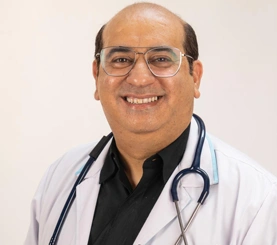
Dr. Yuvraj Monga provides teleconsultation for patients across India, with PEP delivery to most cities, towns, and districts within 12-24 hours. Distance is not a barrier to care.
Consult Dr. Yuvraj Monga: WhatsApp +91 9999219128. All India delivery. 100% confidential.