
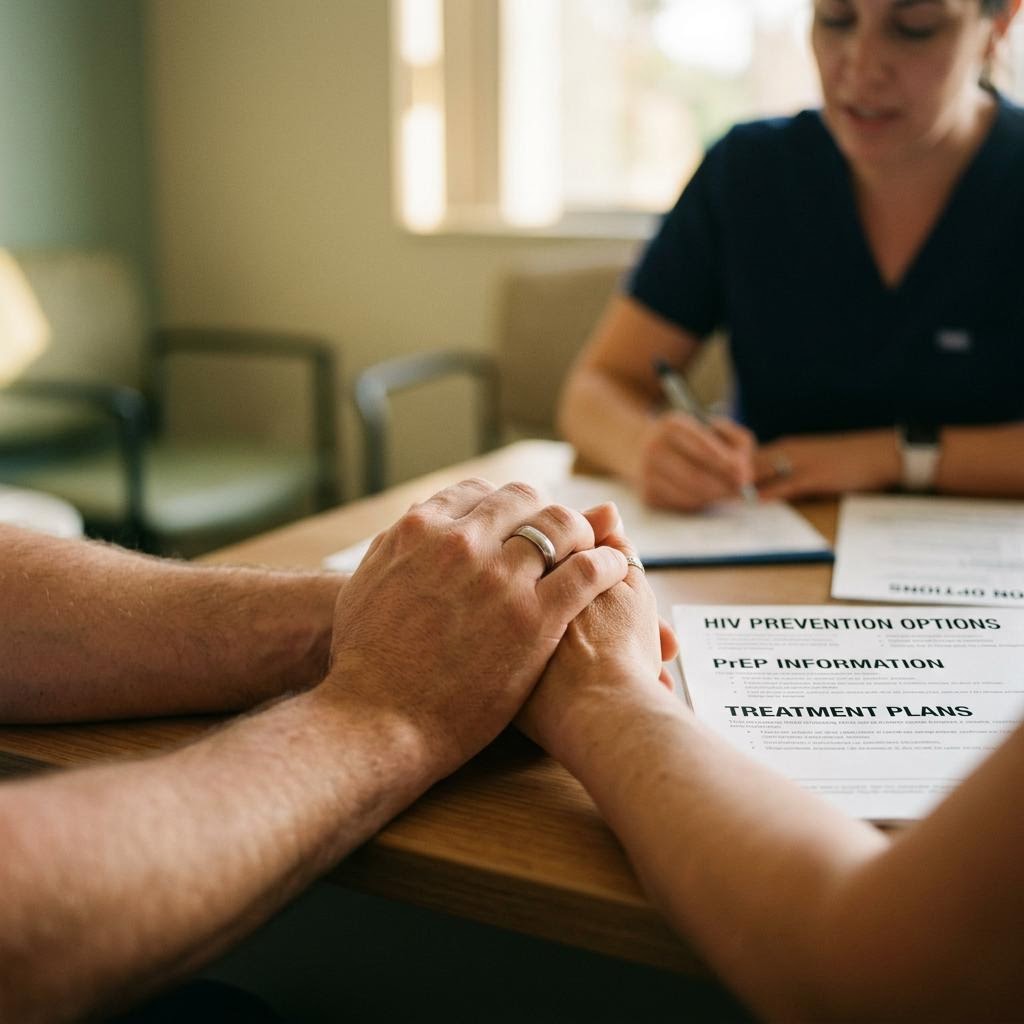
Understanding Serodiscordant Relationships
A serodiscordant couple (also called mixed-status or magnetic couple) is one in which one partner is living with HIV and the other is HIV-negative. These relationships are far more common than many realize, and with modern medicine, they can be just as healthy, intimate, and fulfilling as any other partnership.
PrEP (Pre-Exposure Prophylaxis) has transformed the landscape for serodiscordant couples, offering the HIV-negative partner powerful protection and both partners greater peace of mind.
The Science: U=U Plus PrEP
What Is U=U?
"Undetectable = Untransmittable" (U=U) is a scientifically proven principle: when a person living with HIV takes antiretroviral therapy (ART) as prescribed and maintains an undetectable viral load (less than 200 copies/mL), they cannot sexually transmit HIV to partners.
Massive international studies (PARTNER, PARTNER2, Opposites Attract) involving thousands of serodiscordant couples and tens of thousands of condomless sex acts found zero HIV transmissions when the positive partner maintained an undetectable viral load.
This is revolutionary and liberating for serodiscordant couples: effective HIV treatment not only preserves the health of the positive partner but also completely eliminates sexual transmission risk.
Why Add PrEP If U=U Is Proven?
If an undetectable viral load means no transmission risk, why would the negative partner take PrEP? Several important reasons:
Additional Peace of Mind: While U=U is scientifically sound, many couples appreciate the added security of dual protection-treatment for one partner, prevention for the other. This psychological benefit shouldn't be underestimated.
Viral Load Fluctuations: Even with excellent adherence to ART, life happens. Illness, medication interactions, or lapses in treatment can temporarily affect viral suppression. PrEP provides protection during these windows.
Monitoring Gaps: Viral load tests are typically done every 3-6 months. Between tests, there's a period where you're relying on the assumption that treatment is working. PrEP adds a safety net.
Conception Planning: For couples trying to conceive, PrEP is strongly recommended for the HIV-negative partner. Even if the positive partner is undetectable, adding PrEP provides maximum protection during attempts to conceive.
Outside Risk Factors: If the HIV-negative partner has sexual contact outside the relationship, PrEP protects against those exposures as well.
PrEP for Conception: Safe Pregnancy in Serodiscordant Couples
Many serodiscordant couples in India face discouragement when they want to have children. Medical professionals may tell them it's too risky, or they may encounter judgment about bringing a child into a serodiscordant family.
The truth: with modern medicine, serodiscordant couples can safely conceive and have healthy pregnancies with virtually no risk of HIV transmission.
When the Male Partner Is HIV-Positive
The HIV-negative female partner should start PrEP at least 7 days before attempting conception. This provides protection during timed, condomless intercourse for conception. The male partner should maintain an undetectable viral load.
This combination (U=U + PrEP) reduces transmission risk to essentially zero. Thousands of serodiscordant couples have used this strategy successfully.
When the Female Partner Is HIV-Positive
If the female partner is living with HIV and maintains an undetectable viral load, there is no risk of sexual transmission to the male partner during conception attempts. PrEP for the male partner can still be considered for added peace of mind, but U=U alone is highly protective.
There is also virtually no risk of HIV transmission to the baby during pregnancy and birth when the mother is on effective ART with an undetectable viral load. With proper medical care, over 99% of babies born to HIV-positive mothers are HIV-negative.
Daily PrEP vs. On-Demand PrEP for Serodiscordant Couples
Most serodiscordant couples benefit from daily PrEP rather than on-demand (event-based) dosing. Here's why:
Consistent Protection: In an ongoing relationship, sexual activity isn't always planned 24 hours in advance. Daily PrEP means you're always protected.
Simplicity: Remembering a daily pill is often easier than coordinating the 2-1-1 dosing schedule of on-demand PrEP with sexual activity.
Data for Women: Daily PrEP has more robust evidence for vaginal sex, which is relevant for many serodiscordant couples. On-demand PrEP has primarily been studied in cisgender men who have sex with men.
That said, some couples do use on-demand PrEP successfully, particularly if sexual activity is infrequent and the positive partner has a longstanding undetectable status. This is a conversation to have with your healthcare provider.
Monitoring and Follow-Up for Serodiscordant Couples
Both partners need regular medical care:
For the HIV-Positive Partner:
- Regular viral load testing (every 3-6 months)
- CD4 count monitoring
- ART adherence support
- Screening for other health conditions
For the HIV-Negative Partner on PrEP:
- HIV testing every 3 months
- Kidney function monitoring
- STI screening
- PrEP adherence check and prescription refill
Coordinating care between partners can strengthen the prevention strategy. Some couples appreciate joint appointments where both partners' results are reviewed together (with consent).
Addressing Stigma and Relationship Dynamics
Serodiscordant couples in India often face significant stigma-from families, communities, and sometimes even healthcare providers. This can create relationship strain and discourage couples from seeking the care they need.
Common Challenges:
Disclosure Anxiety: The HIV-positive partner may fear rejection or judgment. Open communication about status, treatment, and prevention is foundational to trust.
Blame and Resentment: Sometimes the negative partner harbors resentment, or the positive partner feels guilt. Couples counseling with an HIV-knowledgeable therapist can help navigate these emotions.
Family Pressure: In Indian families, pressure to marry someone of the same status or to avoid relationships entirely can be intense. Educating families about U=U and PrEP can sometimes shift attitudes, though this isn't always possible.
Fear of Transmission: Even with scientific evidence, fear can persist. PrEP helps address this fear practically, while education and counseling address it emotionally.
When to Start PrEP in a Serodiscordant Relationship
There's no single right time-it depends on your circumstances. Consider starting PrEP if:
- You're beginning a relationship with an HIV-positive partner
- Your partner's viral load is detectable or their status is uncertain
- You're planning to conceive
- You want added peace of mind, even if your partner is undetectable
- There are periods when adherence to ART may be challenging for your partner
- You have sexual contact with other partners in addition to your primary relationship
Can You Stop PrEP Later?
Yes. PrEP isn't necessarily a lifelong commitment. Some serodiscordant couples use PrEP during the early phase of their relationship, then discontinue it once the positive partner has demonstrated consistent viral suppression for an extended period.
Others continue PrEP indefinitely for ongoing peace of mind. Some use it specifically during conception and pregnancy, then stop afterward.
The decision to stop PrEP should always be made in consultation with a healthcare provider and with clear communication between partners about comfort levels and risk tolerance.
Legal and Social Protections in India
It's important to know your rights. In India:
- HIV status is protected health information-disclosure without consent is illegal
- Discrimination based on HIV status is prohibited under law
- People living with HIV have the right to marry, work, and access healthcare without discrimination
Unfortunately, stigma persists despite legal protections. Finding healthcare providers who are knowledgeable, non-judgmental, and affirming is crucial. Dr. Yuvraj Monga's practice specializes in care for serodiscordant couples with absolute confidentiality and respect.
Success Stories: Serodiscordant Couples Thriving
Across India and worldwide, thousands of serodiscordant couples are living full, healthy, intimate lives. Many have children. Many have been together for decades with zero transmission.
The combination of effective HIV treatment and PrEP has made these relationships not just possible, but safe and sustainable. The science is clear, the medications are accessible, and the outcomes are excellent.
Getting Started
If you're in a serodiscordant relationship and considering PrEP, the first step is a confidential consultation. This conversation should cover:
- Your partner's viral load and treatment status
- Your relationship dynamics and sexual practices
- Your goals (prevention, conception, peace of mind)
- Your health history and any contraindications to PrEP
- Practical logistics: cost, access, follow-up care
Dr. Monga's practice welcomes serodiscordant couples and provides tailored care that respects both partners' needs.
The Bottom Line
Being in a serodiscordant relationship doesn't mean living in fear or limiting intimacy. With U=U, PrEP, and proper medical care, transmission risk can be reduced to zero.
You deserve a relationship built on love, trust, and connection-not anxiety about HIV. PrEP is one tool in a comprehensive strategy that allows serodiscordant couples to thrive.
Whether you're considering starting a relationship, already committed, or planning a family, expert guidance and judgment-free support can make all the difference. You're not alone, and your relationship is valid and valuable.