
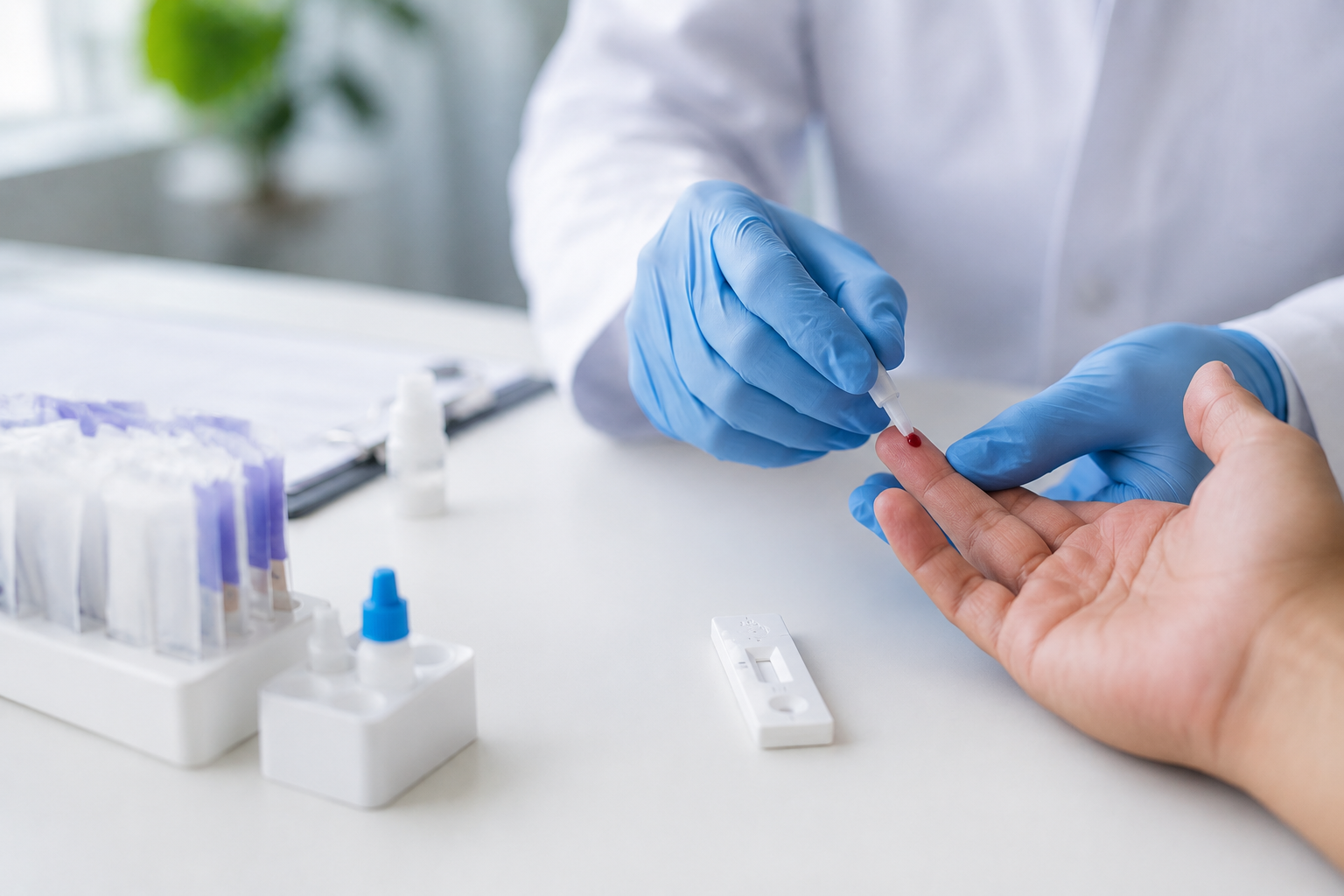
Walk into a clinic for an HIV test and walk out with a result before your lunch break - that's the promise of point-of-care testing, and it's not a marketing exaggeration. It's a genuine piece of diagnostic technology that's changed how quickly people can get answers. But "same-day" and "accurate" aren't automatically the same thing unless the test is done correctly, which is exactly why understanding what's happening behind that 30-minute wait matters.
The short version: point-of-care tests use a small, self-contained device that reacts to your blood or oral fluid sample right there in the room, without needing a laboratory machine. The technology is genuinely reliable when handled correctly - but it still carries the same window-period limits as any antibody test, and any reactive result still needs confirmation before it means anything final.
What "Point-of-Care" Actually Means
Point-of-care simply means the test is performed and read at the location where the sample is collected - a clinic room, a consultation desk - rather than being packaged up and sent to a separate laboratory. No centrifuge, no analyser, no waiting for a courier. This is what makes a same-day, often same-visit, result possible.
It's a format, not a specific brand of test - most rapid HIV antibody tests and several 4th-generation antigen/antibody tests are designed to work as point-of-care devices, using a finger-prick of blood or an oral fluid swab.
The Technology Behind the 30-Minute Result
Most point-of-care HIV tests use a method called lateral flow immunochromatography - essentially the same underlying principle as a home pregnancy test, adapted for detecting HIV antibodies (or antibodies plus antigen, in 4th-generation versions). Your sample moves along a treated strip inside the device; if HIV antibodies are present, they bind to markers on the strip and produce a visible line within the result window. A second line acts as a built-in control, confirming the test itself worked correctly.
This is why a valid point-of-care result requires two things to be true: an actual biological reaction happened, and the device's control line also appeared. If the control line is missing, the result - whatever it shows - isn't considered valid and the test needs to be repeated.
Want your result read by someone trained to catch what a self-test might miss?
A supervised, doctor-led consultation means your point-of-care test is read correctly, interpreted properly, and immediately followed by a clear next step - whether that's reassurance, a repeat test, or starting care.
Book a confidential consultation with Dr. Yuvraj Monga for ₹2,000, with all-India medicine delivery and PEP delivery within 12–24 hours when needed. Confirm current availability directly before booking.
How Clinics Actually Ensure Accuracy
The device does the chemistry, but accuracy still depends heavily on how the test is handled. A few things separate a reliable point-of-care result from an unreliable one:
- Correct storage - test strips are validated within a specific temperature range; kits stored improperly can give reduced sensitivity even though they still "work."
- Trained sample collection - an inadequate finger-prick sample volume can affect how the strip reacts.
- Reading within the correct time window - results read too early can miss a faint positive line; results read too late can show a false line as the strip dries. The manufacturer's specified window matters.
- Internal and external quality checks - a properly run testing site periodically runs known positive and negative control samples to confirm their process, kits, and staff are performing correctly.
None of this is exotic - it's routine laboratory-quality discipline applied to a portable device. But it does mean the person running the test matters just as much as the test itself.
Point-of-Care vs. Lab-Sent Testing
| Point-of-care testing | Lab-sent testing | |
|---|---|---|
| Where it's processed | Right where the sample is taken | Sent to a central or reference laboratory |
| Typical turnaround | 15-30 minutes | Same day to a few days |
| Equipment needed | A single-use test device, no machine required | Laboratory analysers and trained lab staff |
| Best suited for | Same-visit screening and quick answers | Higher-sensitivity tests like 4th-gen Ag/Ab or NAT |
| Still needs confirmation if reactive? | Yes, always | Yes, always |
Point-of-care isn't a lesser version of lab testing - it's a different tool suited to a different need: speed and immediacy over the highest possible sensitivity.
What "Same-Day" Really Means - and Doesn't
Same-day means you don't have to wait for a courier or a lab queue - not that the result is somehow more final than any other screening test. A non-reactive point-of-care result taken very soon after a possible exposure can still fall within the window period, meaning it may need to be repeated later. A reactive point-of-care result is a flag, not a diagnosis, and needs confirmatory testing exactly the same way a lab-sent reactive result does.
Speed changes how quickly you learn something, not how conclusively that something is settled - the two are easy to conflate when a result appears in 20 minutes.
When Point-of-Care Testing Isn't Enough on Its Own
- Testing very soon after a specific, known exposure - a more sensitive 4th-generation or NAT test may be more appropriate.
- A reactive point-of-care result - always requires confirmatory testing before any decision is made.
- Situations needing precise viral load or CD4 monitoring - these require laboratory-based testing, not a point-of-care device.
- Uncertainty about how the specific test was stored or performed - if you're not confident it was handled correctly, a repeat under proper clinical supervision is reasonable.
Questions Worth Asking Before a Point-of-Care Test
- Which specific test is being used, and what's its window period?
- How is the kit stored, and is it within its expiry date?
- If my result is reactive, what's the confirmatory testing plan, and how quickly can it happen?
- Is this the right test for my specific exposure timeline, or would a different test give a clearer answer?
- Will I get a written report, and who do I follow up with afterward?
The Bottom Line
Point-of-care HIV testing is a real, well-validated piece of diagnostic technology, not a shortcut. Its value is speed and convenience, not a replacement for the same standards of storage, training, timing, and confirmatory follow-up that any HIV test requires. A same-day result is genuinely useful - as long as it's read by someone who understands exactly what it can, and can't, tell you on its own.
This article is educational and general in nature. It is not a diagnosis, prescription, or a substitute for an individual consultation. If you have questions about which test is right for your situation or how to interpret a point-of-care result, speak with a qualified clinician.