
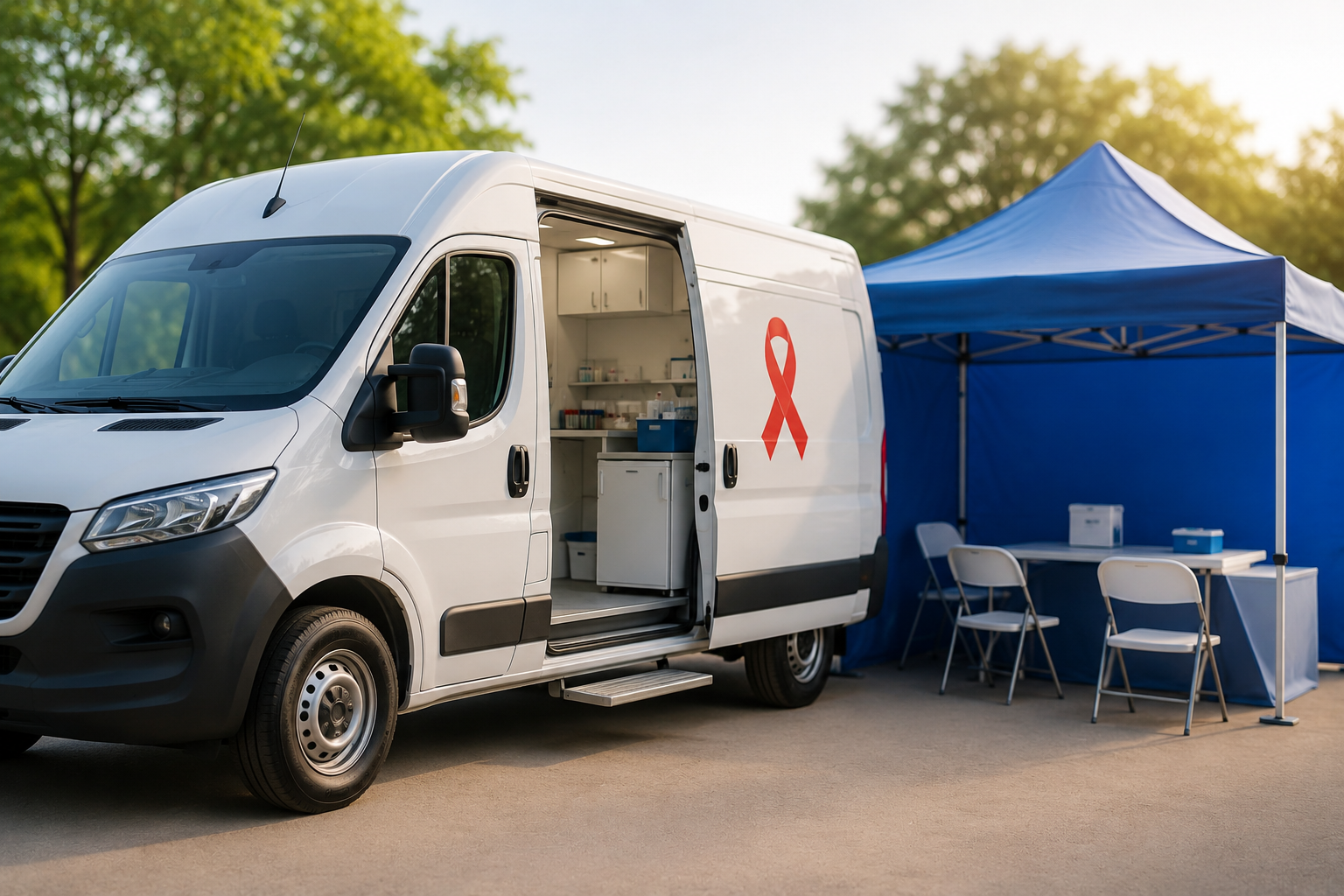
You've probably walked past one - a van parked outside a college fest, a table set up at a workplace wellness day, a camp organised during a community health drive. Free HIV testing, right there, no appointment needed. It raises a fair question: is a test done at a folding table in a parking lot actually as reliable as one done in a clinic? The honest answer is that the test itself can be just as accurate - but the setting introduces variables that a fixed clinic usually controls for automatically, and it's worth knowing what to check before you roll up your sleeve.
The short version: the rapid test kits used at mobile camps are typically the same government-approved technology used everywhere else, so accuracy isn't inherently lower. What varies is quality control - how the kits were stored, who's administering the test, whether real counselling happens, and what the plan is if your result comes back reactive. Those factors depend entirely on how well a specific camp is run, not on the test format itself.
How Mobile Testing Actually Works
Mobile testing vans and camps use the same rapid antibody test technology found in clinics - a finger-prick or oral fluid sample, read visually within a set time window, giving a result in about 15 to 30 minutes. The portability comes from the test format itself, not from a different or lesser technology. In principle, a well-run camp using properly stored, unexpired kits and trained staff can deliver a result exactly as reliable as one from a fixed clinic.
The catch is that word "well-run." Camps vary enormously depending on who's organising them, how they're funded, and how much oversight they have.
Not sure a camp setting is right for you?
A private, doctor-led consultation removes the guesswork entirely. You get a proper pre-test conversation, a trained clinician reading your result, and a clear plan for whatever comes next - without a queue or an open table.
Consult Dr. Yuvraj Monga confidentially for ₹2,000, with all-India medicine delivery and PEP delivery within 12–24 hours when needed. Confirm current availability directly before booking.
What Actually Affects Accuracy at a Camp Setting
- Kit storage and temperature - rapid test kits are validated within a specific storage temperature range. Kits left in direct heat - inside a van parked in the sun for hours, for instance - can degrade outside that range, which may affect sensitivity even if the kit still "works."
- Expiry and batch handling - a legitimate camp should be using kits well within their expiry window, from a batch that's been stored correctly since manufacture, not just since arriving at the camp.
- Who's performing and reading the test - results need to be read within a defined time window; reading too early or too late can produce a misleading result. This depends on the skill and training of whoever is running the table.
- Whether counselling actually happens - a rushed camp handing over a result with no explanation skips a step that's meant to be part of every HIV test, not an optional extra.
None of these issues are unique to mobile testing - a poorly run fixed clinic can have the same problems. But a one-day camp has less institutional oversight than a permanent facility, so it's worth actively checking rather than assuming.
Signs a Camp Is Reliable - and Signs to Question
| Sign | Reassuring | Worth questioning |
|---|---|---|
| Staff | Trained counsellor + lab technician present | Volunteers only, no visible qualifications |
| Privacy setup | Curtained or separate area for testing and results | Open table, results read aloud or in a queue |
| Test kits | Sealed, stored away from direct heat, within expiry | Kits left in open sun/heat, no visible expiry check |
| Counselling | Brief pre-test and post-test conversation offered | Test handed over with no explanation of what it means |
| Referral plan | Clear next step named if result is reactive | No mention of what happens if result is reactive |
One or two "worth questioning" signs don't automatically mean a camp is unsafe - but several together are a reasonable reason to test elsewhere instead.
The Privacy Problem Nobody Mentions
Even a technically accurate test can create a real problem if it's delivered without privacy. A folding table in an open hallway, a line of people waiting within earshot, or a result read aloud rather than handed over privately can turn a routine health check into an exposing moment - regardless of how good the test kit itself is. A reliable camp will have some form of separated space for the actual test and result delivery, even if the rest of the setup is informal.
If Your Result Is Reactive at a Camp
A reactive result at a mobile camp should never be treated as a final diagnosis, whether it happens at a camp or anywhere else. What should happen next is a clear referral: the camp organisers should tell you exactly where to go for confirmatory testing and how to start that process, rather than leaving you with just a positive-sounding result and no next step. If a camp can't tell you what happens after a reactive result, that's one of the clearest signs it isn't equipped to be doing this testing responsibly.
A reactive screening result always needs confirmatory testing through a proper clinical pathway before it's treated as a diagnosis - this is true regardless of where the initial test happened.
If a camp hands you a reactive result and no clear next step, the fastest way to get one is a direct consultation - Dr. Yuvraj Monga can arrange confirmatory testing and, if needed, start treatment without you having to chase down a referral yourself.
When a Camp Is a Good Fit - and When to Choose Something Else
Good fit: you want a quick first check, you're comfortable with a somewhat public setting, and you're prepared to follow up privately through a clinic or consultation if the result is reactive.
• Better to choose a private or confidential clinical option instead: you have strong privacy concerns, you want proper pre- and post-test counselling as part of the process, you may need PEP or treatment started quickly, or you simply want more control over who's involved in your care.
Neither option is wrong - the point is matching the setting to what you actually need from the result. If any of the second list sounds like you, a direct, private consultation is usually the simpler starting point rather than working around a camp's limitations.
A Practical Checklist Before You Test at a Van or Camp
- Ask who is organising the camp and whether the testing kits are government-approved and within expiry.
- Look for a private space for the actual test and result delivery, not just an open table.
- Ask what happens if your result is reactive - a specific next step, not a vague answer.
- Confirm counselling is part of the process, even briefly, before and after the test.
- If anything feels rushed or unclear, it's completely reasonable to test through a private clinic or consultation instead.
The Bottom Line
Mobile HIV testing camps and vans aren't inherently unreliable - the underlying test technology is the same one used in any clinic. What determines whether a specific camp is trustworthy is quality control: proper kit storage, trained staff, real counselling, and a clear plan for what happens next if the result is reactive. A few minutes of asking the right questions before you test tells you far more than the setting itself does. And if you'd rather skip that checklist entirely, a private consultation gives you all of it - trained staff, real counselling, and a clear next step - by default.
This article is educational and general in nature. It is not a diagnosis, prescription, or a substitute for an individual consultation. If you've tested at a camp and received a reactive result, or you'd prefer a private, confidential testing pathway from the start, speak with a qualified clinician.