
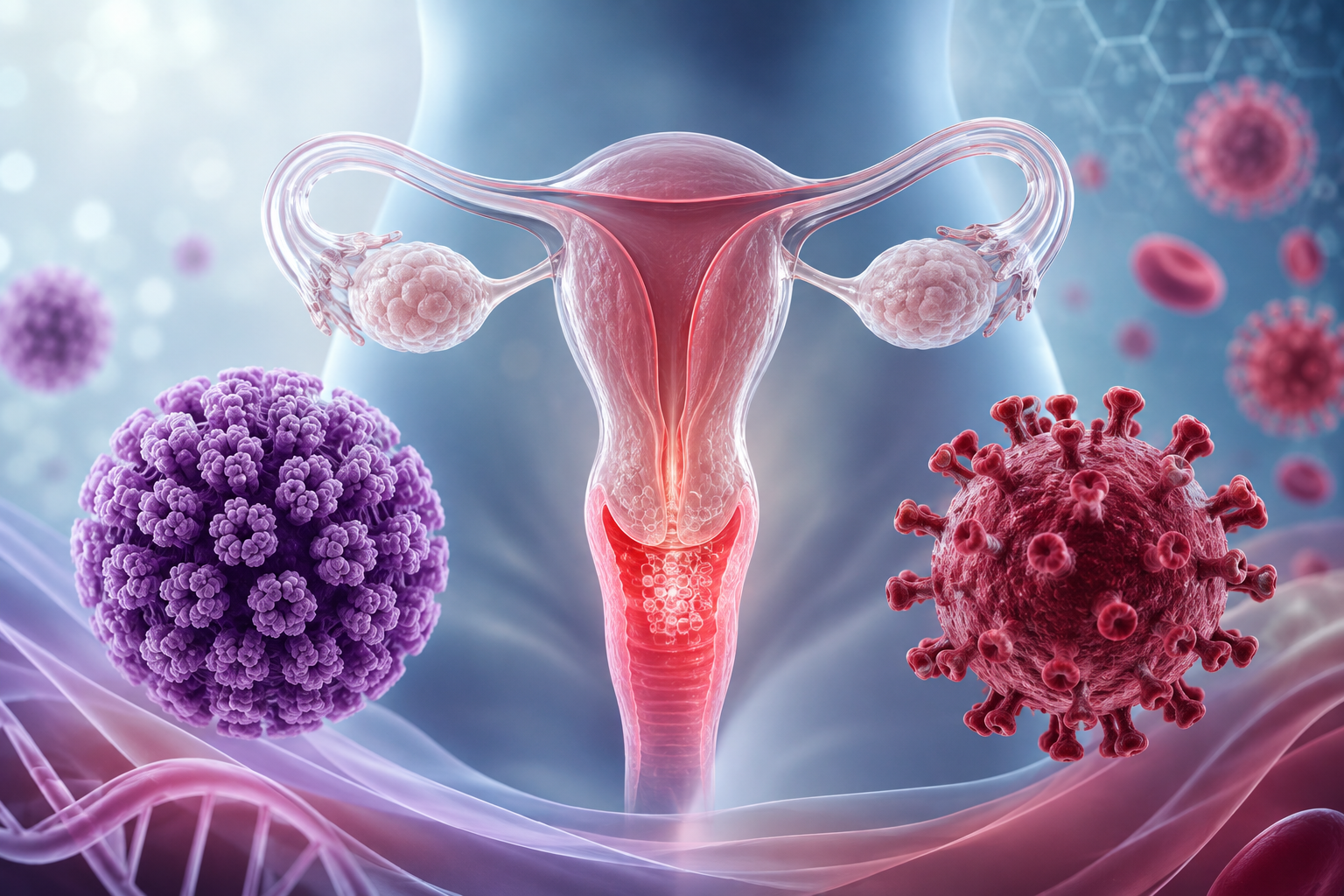
Regular screening is a practical act of care. It is not a prediction that cancer will happen.
This guide is educational. Your symptoms, timing, medicines and test reports may change the right next step-please ask a qualified clinician.
The connection in plain language
HPV is common and often clears without treatment. HIV can affect immune function, which may make persistent HPV or cervical cell changes more likely in some people. This does not mean that every person with HIV will develop cancer; it means screening and follow-up deserve attention.
A gynaecologist can recommend the appropriate screening method and interval based on age, prior results, vaccination and local guidance.
Vaccination and screening work together
HPV vaccination can reduce risk from the HPV types most associated with disease, but it does not replace screening. Ask a clinician whether vaccination is suitable for you. Bring previous Pap, HPV or colposcopy reports to appointments.
Bleeding after sex, unusual discharge or pelvic pain should be assessed rather than self-treated.
Protect privacy while getting care
You can ask a clinic who will see your report and how it is stored. If you are living with HIV, coordinate HIV and women's health care so that medicines, pregnancy plans and screening are considered together.
Small, regular appointments are more useful than waiting for a worrying symptom.