
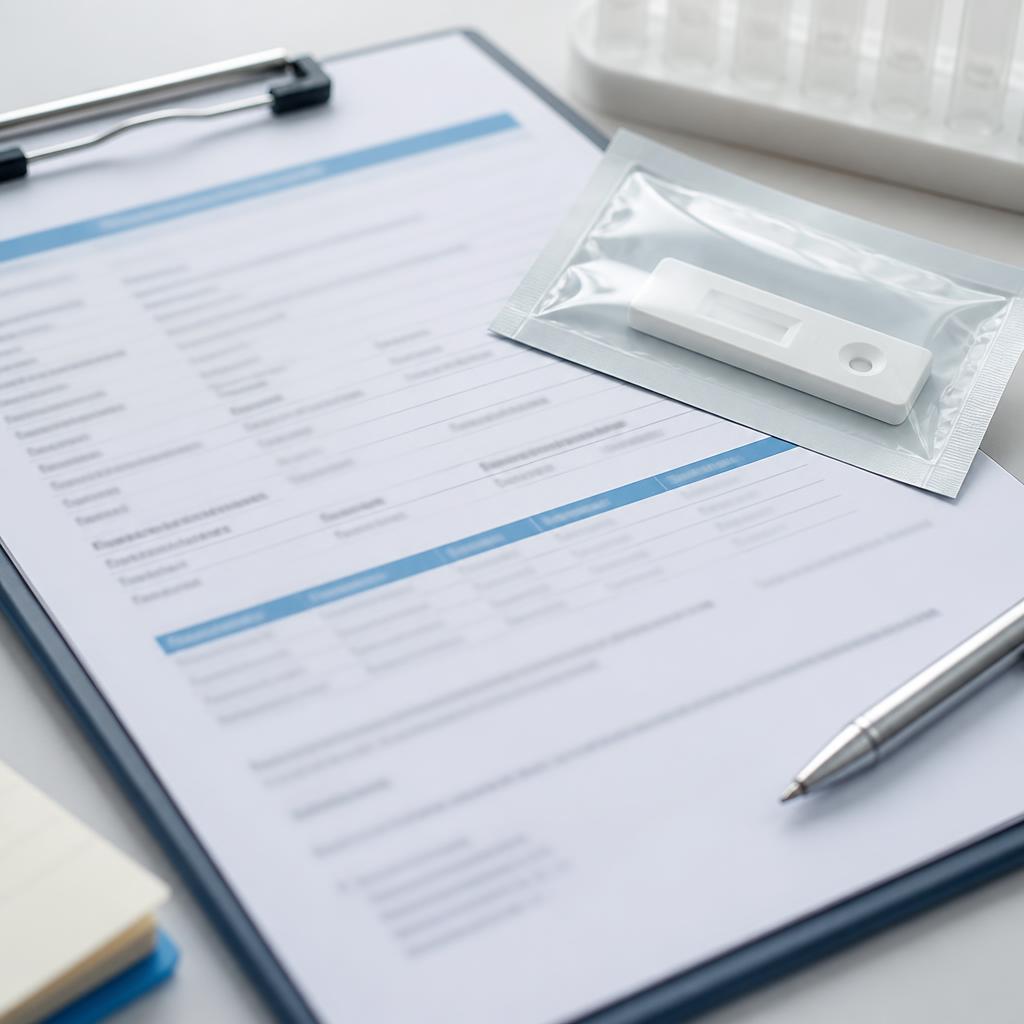
Have you been wondering, “How to Read Your HIV Test Report: Reactive, Non-Reactive, and Indeterminate Explained”?
Short answer
A non-reactive result usually means the test did not detect HIV markers at the time of testing. A reactive screening result means the sample needs the recommended confirmatory process; it is not, by itself, a final diagnosis. An indeterminate or inconclusive result means the laboratory needs more information or a repeat sample. The test name, timing, and laboratory instructions matter more than one word viewed in isolation.
Why the context matters
Reports may use “negative,” “non-reactive,” “reactive,” “positive,” “equivocal,” or “indeterminate,” and different tests have different window periods. A fourth-generation test looks for antigen and antibodies, while antibody-only tests can take longer to become reactive. A non-reactive report taken too early after an exposure may need repeating. A reactive report can occur for several reasons and must be confirmed through the testing algorithm. Do not infer a diagnosis from a highlighted line, reference range, or a social media screenshot.
What to do now
Keep the complete report, including test method, sample date, and laboratory name. Ask the testing centre what your result means and what the next test is before leaving. Do not self-medicate or tell a partner a screening result is final without confirmation. If you are distressed, bring a trusted person only if you want to; confidentiality and consent still apply. A clinician can also screen for other STIs and discuss prevention while the report is clarified.
Keep the response proportionate
Write down what happened and roughly when, while the details are fresh. Do not try to diagnose HIV from symptoms; many symptoms have many causes, and early HIV may have none. Ask about other STIs, hepatitis, pregnancy, wounds, or treatment needs when relevant. Whole-person care is safer care, and a calm plan is more useful than repeated searching.
Timing, testing, and follow-up
Compare the sample date with the possible exposure date. If the test was inside its window period, a repeat at the recommended time is part of accurate care, not evidence that the first report was “bad.” If a result is reactive, follow up promptly rather than repeating random home tests. If an exposure occurred within 72 hours, ask about PEP separately; a test report should not delay time-sensitive prevention.
Common mistakes and myths
“Reactive” does not mean a confirmed diagnosis, and “non-reactive” does not always end a window period. A highlighted number is not interpretable without the assay’s reference range. Do not search a single word in isolation; read the full report with the laboratory or a clinician who can explain the next step.
Practical prevention from here
Keep the report private, note the test method and sample date, and follow the laboratory’s confirmation or repeat plan. Ask for help before changing medicines or relationships based on one word. Use condoms or PrEP when relevant and seek PEP promptly after a new possible exposure. A planned test is better than repeated uncertainty.
What this means in everyday life
The phrase “how to read hiv test report” can make an ordinary day feel newly dangerous. Try to separate the object or moment from the route HIV needs in order to spread. A bite, mark, stain, shared surface, delayed report, or unfamiliar word may deserve an explanation, but it is not a diagnosis by itself. You can continue with ordinary work, meals, exercise, family contact, or grooming while you arrange the right care. If you are supporting someone else, listen without demanding private details and help them reach a clinician when the situation is genuinely time-sensitive.
A simple plan for the next 24 hours
First, take care of any wound or symptom with gentle first aid. Next, write down the date, the exact contact, the fluid involved, and what you know about a partner, device, salon, clinic, or test. Then choose one reliable next step: call the testing centre, contact an ICTC, speak with Dr. Yuvraj Monga, or seek urgent care if a recent exposure may qualify for PEP. Avoid random antibiotics, harsh cleaning, public posts, and repeated tests without a plan. A short, accurate timeline gives a specialist much more to work with than a long list of frightening search results.
Questions to bring to a consultation
Bring a photo or copy of the full report, but hide personal identifiers when sharing digitally. Dr. Yuvraj Monga can explain terminology, confirmation, treatment, and privacy in a private consultation. A result is information that guides the next step—not a judgement about you.
Privacy is part of good care
Before a test or consultation, you can ask how your information will be handled, who will see a report, and how results will reach you. You can choose what to share and ask for an explanation in simple English. A reactive screening result is not the same as a confirmed diagnosis, and a non-reactive result may still need repeat testing when taken inside a window period.
You deserve a calm conversation
There is no prize for carrying uncertainty alone. Dr. Yuvraj Monga offers confidential consultations for HIV, AIDS, STIs, PEP, PrEP, ART, symptoms, and test reports. The consultation fee is Rs. 2,000. The goal is simple: give you a medically responsible answer and a plan you can actually follow.
This article is educational and general in nature. It is not a diagnosis, prescription, or a substitute for an individual consultation. If you have questions about your specific PEP regimen or supplements you're taking, speak with a qualified clinician.