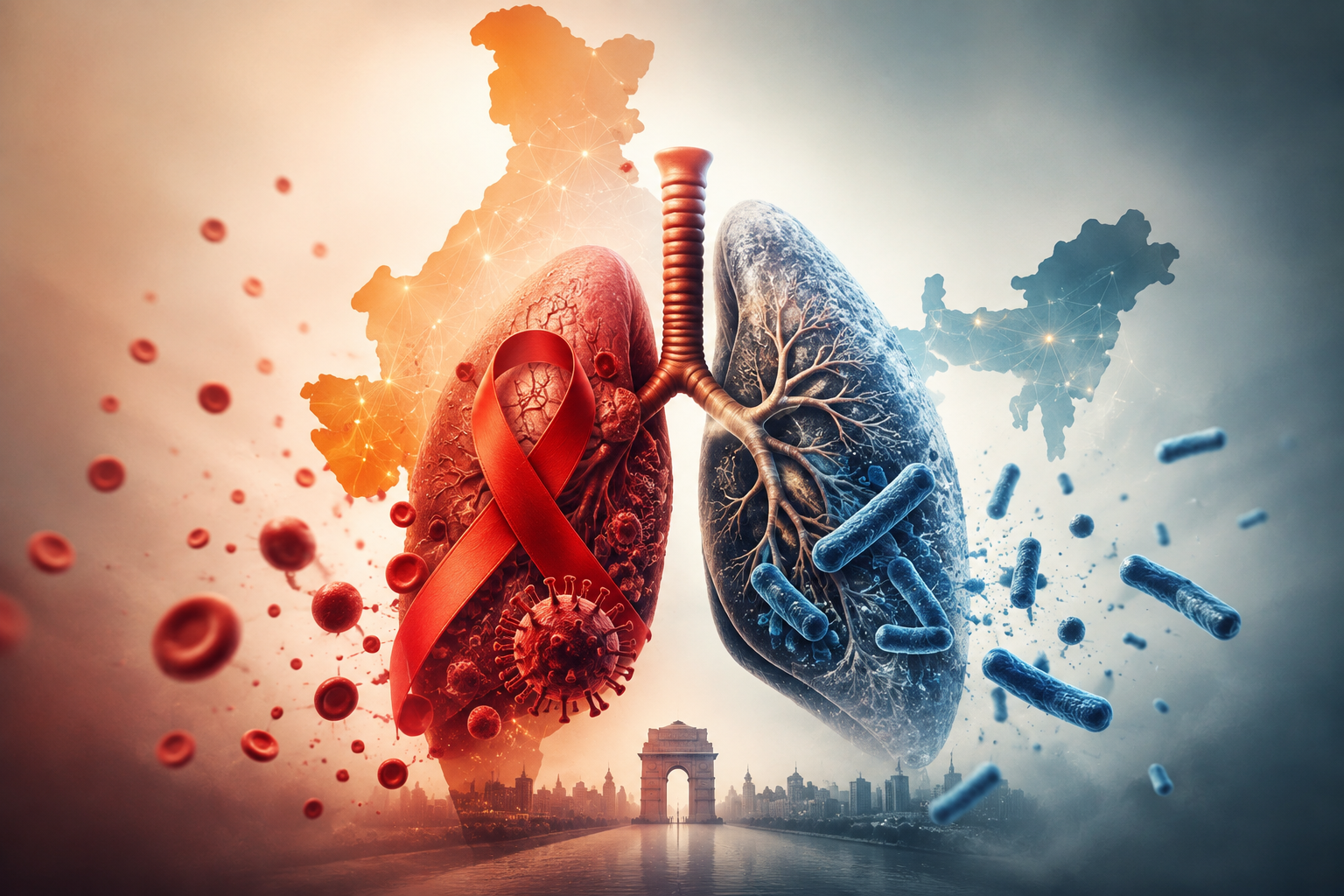
TB is treatable. When it occurs with HIV, coordinated and timely care becomes especially important.
This guide is educational. Your symptoms, timing, medicines and test reports may change the right next step-please ask a qualified clinician.
Why the two conditions are discussed together
HIV can weaken immune defences, increasing the risk that latent tuberculosis becomes active. TB can also be the illness that leads someone to discover HIV. This is why clinicians may ask about cough, fever, night sweats, weight change and contact with TB-even when a patient came for another concern.
Not every cough is TB, and symptoms need medical evaluation. Testing may include chest imaging, sputum or other investigations based on the site of disease.
Medicines need coordination
TB medicines and ART can interact, and the correct timing of treatment depends on the person's condition, immune status and other clinical factors. Doctors may adjust regimens and monitor liver function or other side effects. Never stop either treatment because a symptom appears without speaking to the treating team.
A written list of every medicine, supplement and traditional remedy helps the doctor make safer decisions.
When to seek help quickly
Seek prompt care for breathlessness, coughing blood, severe weakness, confusion or rapidly worsening fever. If you have HIV and have been exposed to TB, ask your care team about screening even if you feel well.
India has public TB and HIV services, while private infectious disease specialists can help coordinate a discreet plan when access or privacy is a concern.