
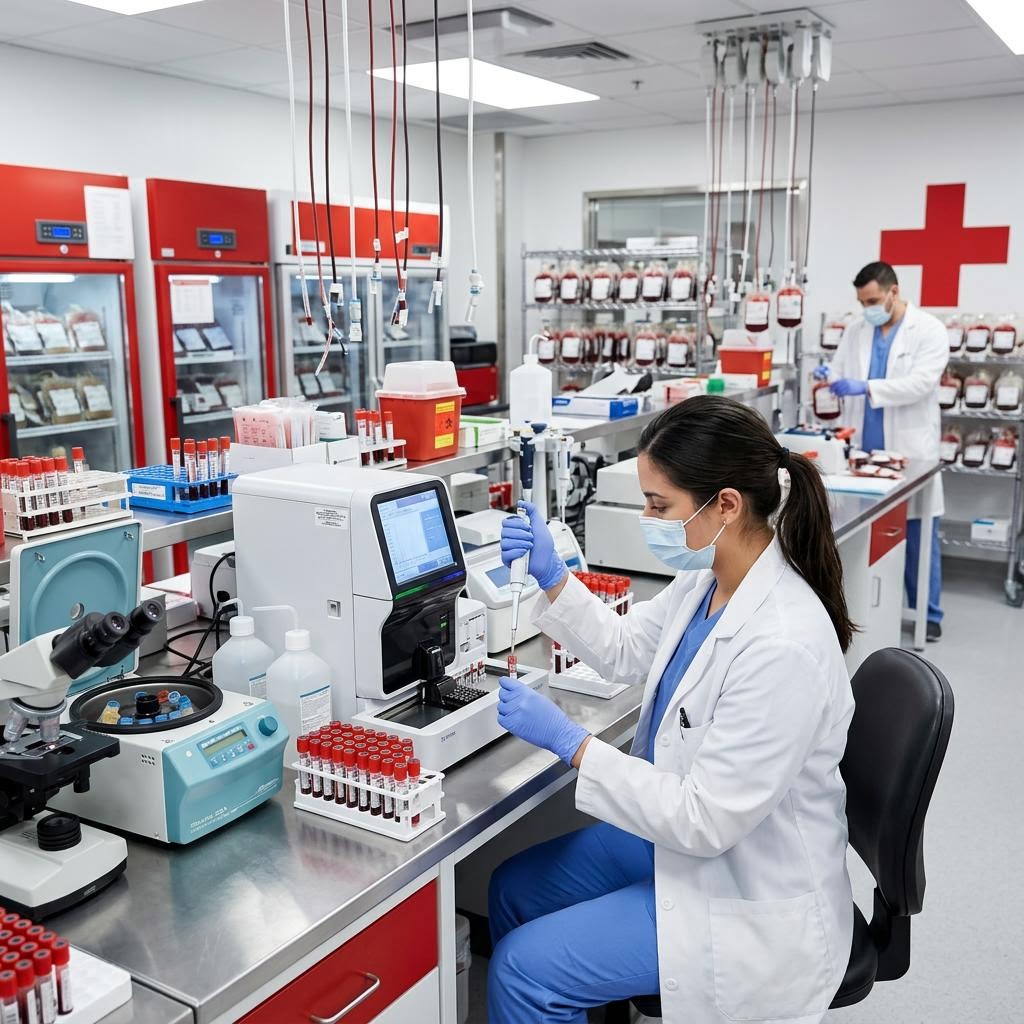
A Risk That Has Been Dramatically Reduced - But Not Eliminated
In the early years of the HIV epidemic, blood transfusions were a significant source of HIV transmission. Donated blood was not routinely screened for HIV, and tens of thousands of people - including haemophilia patients, surgery patients, and new mothers - contracted HIV through what should have been life-saving medical procedures. Those days are largely behind us in developed healthcare systems. But "largely" is not "completely," and understanding the current picture in India's healthcare system in 2026 is important for anyone who has recently received a transfusion or blood product.
How Blood Is Screened for HIV Today
Modern blood banking uses multiple layers of testing to ensure the safety of donated blood. In India, the National Blood Policy mandates HIV screening on all donated blood units. The screening process includes:
- 4th Generation ELISA tests: These detect both HIV antibodies and the p24 antigen, significantly reducing the "window period" during which an infected donor's blood might test negative.
- Nucleic Acid Testing (NAT): This tests directly for HIV genetic material (RNA/DNA) and can detect infection as early as 10-12 days post-exposure. NAT has been progressively rolled out across licensed blood banks in India, particularly in major cities.
- Donor screening: All donors undergo a structured risk questionnaire that defers high-risk donors from donating.
The Residual Risk: The Window Period Problem
Despite these advances, a theoretical residual risk remains due to the "window period" - the brief time after a person becomes infected with HIV during which even the most sensitive tests may not detect the infection. With 4th Gen ELISA, this window is approximately 15-18 days. With NAT, it shrinks to 10-12 days. A donor who donates blood during this window could theoretically pass HIV-infected blood that passes screening.
The mathematical probability of this happening in a licensed blood bank that uses NAT: estimated at 1 in 1.8 to 2.7 million transfusions in high-income countries. India's figures vary by facility - major urban licensed blood banks approach this level of safety, while smaller facilities in rural areas may have more limited NAT access.
The Two-Tier Reality of Blood Safety in India
India's blood banking system in 2026 is significantly safer than it was even a decade ago, but it remains a two-tier system:
Licensed Blood Banks in Government and Major Private Hospitals
These facilities typically use 4th Gen ELISA and increasingly NAT testing. Blood collected here is as safe as blood in most middle-income countries. The risk of HIV from a transfusion here is extremely low - approaching theoretical zero.
Unlicensed or Informal Blood Supply
In some emergency situations, particularly in rural or under-resourced settings, blood may be supplied by paid donors or through informal channels that bypass rigorous screening. Blood from such sources carries a substantially higher risk and should be avoided whenever possible. Always insist on blood from a licensed, registered blood bank.
Is PEP Indicated After a Blood Transfusion?
PEP after a blood transfusion is a different clinical scenario than after a sexual exposure. The key factors are:
- Was the blood from a licensed, screened source or from an unverified source?
- What was the recipient's HIV status before the transfusion?
- Is there any reason to believe the donated blood was from a high-risk individual?
If there is genuine concern about the source of blood received - especially if received outside a formal hospital setting - a consultation with an HIV specialist like Dr. Yuvraj Monga is strongly recommended within 72 hours. The risk assessment is different from a sexual exposure, but the 72-hour urgency for PEP applies equally.
If the Transfusion Was More Than 72 Hours Ago
If more than 72 hours have passed since a potentially unsafe transfusion, PEP is no longer applicable. Instead, the appropriate next step is HIV testing. A 4th generation HIV test can be done at 4 weeks post-transfusion for a preliminary result, with a confirmatory test at 12 weeks. If positive, ART should be initiated immediately. Modern ART therapy in 2026 means a normal quality of life and life expectancy.
Protecting Yourself: Questions to Ask Before and After a Transfusion
- Is this blood from a licensed, registered blood bank?
- Has it been screened with NAT (Nucleic Acid Testing)?
- Was a 4th Generation ELISA test used?
- Can I see the blood group and screening documentation?
In an emergency, these questions may not be answerable. But in elective or semi-elective situations - such as planned surgery - they are worth asking.
Concerned About a Recent Blood Transfusion?
If you have received blood from an unverified source within the last 72 hours, or if you have concerns about a recent transfusion, consult Dr. Yuvraj Monga immediately on WhatsApp at 9999219128. Expert assessment, complete confidentiality, and PEP delivery anywhere in India in 12-24 hours if required.