Have you been wondering, “Got Cut at the Barber Shop? Here's Your Real HIV Risk”?
Short answer
A small barber-shop nick is usually a very low-risk event for HIV, especially when the cut is superficial and tools are cleaned between clients. HIV does not survive well outside the body, and a dry tool is not the same as a needle carrying fresh blood directly into a vein. The situation deserves a closer look only when a sharp instrument has visible fresh blood and immediately breaks your skin, or when the cut is deep and the hygiene process is clearly unsafe.
Why the context matters
A razor or trimmer can make a cut look dramatic because the scalp and face bleed easily. Seeing a red mark does not tell you that HIV was present. The important questions are whether another person’s fresh blood was on the instrument, whether the instrument was reused without cleaning, and whether it entered your open wound immediately. A barber who uses a new disposable blade, cleans reusable equipment, and uses fresh towels is interrupting the possible transmission pathway. Hepatitis B and C have different survival and prevention considerations, so a healthcare conversation can be useful even when HIV risk is negligible.
What to do now
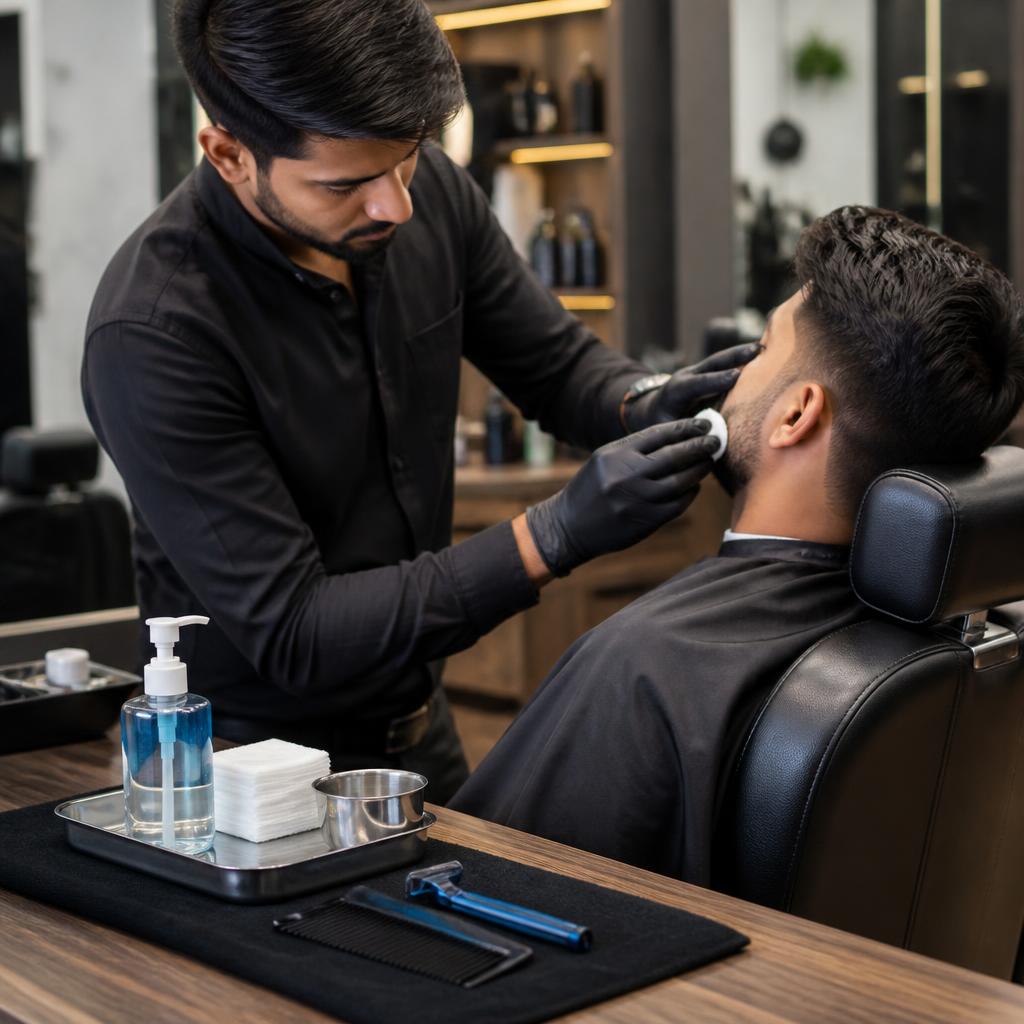
Wash the area gently with soap and running water, apply light pressure with clean gauze, and let the barber know if the wound continues to bleed. Do not use bleach, spirit, or concentrated antiseptic inside an open cut. Before your next visit, look for sealed blades, a clean workstation, a disinfectant process for reusable tools, and a fresh neck strip or towel. You can ask directly, “Is this blade new?” A reputable shop should answer without making you feel difficult.
Keep the response proportionate
Write down what happened and roughly when, while the details are fresh. Do not try to diagnose HIV from symptoms; many symptoms have many causes, and early HIV may have none. Ask about other STIs, hepatitis, pregnancy, wounds, or treatment needs when relevant. Whole-person care is safer care, and a calm plan is more useful than repeated searching.
Timing, testing, and follow-up
PEP is considered only after a clinically meaningful exposure and is time-sensitive, ideally started as soon as possible and within 72 hours. It is not automatically needed for every barber cut. If the instrument had visible fresh blood and the cut was deep, contact an HIV specialist or an urgent care service today with the exact timing. Testing at the same moment cannot detect a brand-new infection; a clinician can map a baseline and follow-up schedule based on the test type.
Common mistakes and myths
A red mark after a haircut is not proof that a used blade carried HIV. Another common mistake is assuming that every reused-looking tool is equally dangerous; risk depends on fresh blood, immediacy, depth, and route. Good hygiene matters, but repeated emergency testing after a dry superficial nick can create harm without adding useful information.
Practical prevention from here
Choose a barber who opens a fresh blade, disinfects clippers, changes towels, and welcomes questions. Keep hepatitis B vaccination in mind and carry simple wound-care supplies when travelling. A good prevention habit is asking once, calmly, rather than inspecting every tool through fear. If there is a deep fresh-blood injury, call early.
What this means in everyday life
The phrase “hiv risk cut at barber shop” can make an ordinary day feel newly dangerous. Try to separate the object or moment from the route HIV needs in order to spread. A bite, mark, stain, shared surface, delayed report, or unfamiliar word may deserve an explanation, but it is not a diagnosis by itself. You can continue with ordinary work, meals, exercise, family contact, or grooming while you arrange the right care. If you are supporting someone else, listen without demanding private details and help them reach a clinician when the situation is genuinely time-sensitive.
A simple plan for the next 24 hours
First, take care of any wound or symptom with gentle first aid. Next, write down the date, the exact contact, the fluid involved, and what you know about a partner, device, salon, clinic, or test. Then choose one reliable next step: call the testing centre, contact an ICTC, speak with Dr. Yuvraj Monga, or seek urgent care if a recent exposure may qualify for PEP. Avoid random antibiotics, harsh cleaning, public posts, and repeated tests without a plan. A short, accurate timeline gives a specialist much more to work with than a long list of frightening search results.
Questions to bring to a consultation
Bring the date, the type of blade or instrument, whether you saw fresh blood, and whether your hepatitis B vaccination is up to date. A consultation can also review tetanus or wound care when appropriate. Confidential advice is available even if you are unsure whether the event counts as an exposure. The goal is not to blame a barber or frighten you; it is to identify the small set of facts that genuinely changes care.
Privacy is part of good care
Before a test or consultation, you can ask how your information will be handled, who will see a report, and how results will reach you. You can choose what to share and ask for an explanation in simple English. A reactive screening result is not the same as a confirmed diagnosis, and a non-reactive result may still need repeat testing when taken inside a window period.
You deserve a calm conversation
There is no prize for carrying uncertainty alone. Dr. Yuvraj Monga offers confidential consultations for HIV, AIDS, STIs, PEP, PrEP, ART, symptoms, and test reports. The consultation fee is Rs. 2,000. The goal is simple: give you a medically responsible answer and a plan you can actually follow.
This article is educational and general in nature. It is not a diagnosis, prescription, or a substitute for an individual consultation. If you have questions about your specific PEP regimen or supplements you're taking, speak with a qualified clinician.