
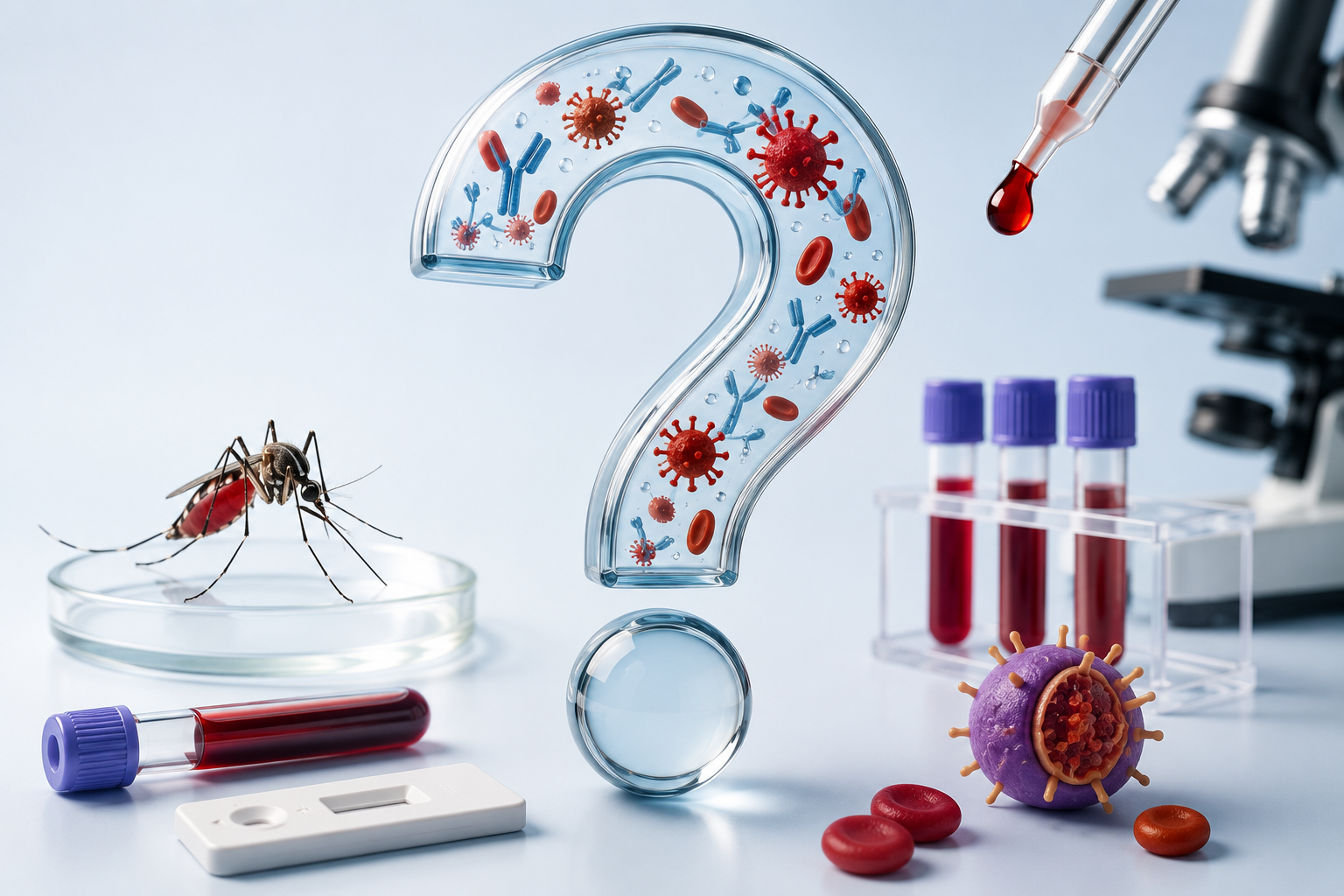
A fever illness and an HIV report are not interchangeable stories. Here is how to slow down and read the result correctly.
This guide is educational. Your symptoms, timing, medicines and test reports may change the right next step-please ask a qualified clinician.
A reactive screen is not a final diagnosis
Some HIV screening tests can rarely react because of biological or technical reasons. A recent infection, vaccination, autoimmune condition or other factor may be discussed by a clinician. A malaria or dengue diagnosis does not automatically mean an HIV test is false, and it does not prove HIV either.
The important word on a report is often "reactive", not "positive". Ask the laboratory or doctor what confirmatory algorithm applies.
Timing and test type matter
Different tests look for different evidence and become informative at different times after exposure. A doctor can recommend the appropriate test and follow-up interval rather than relying on a single internet answer.
Take the original report, not only a screenshot, and share any fever, medicines, pregnancy or recent vaccination history.
Do not let confusion delay care
If the result is confirmed, treatment and counselling are available. If it is not confirmed, you still deserve a clear explanation and a documented next step. Avoid repeating random tests at multiple labs without guidance; that can increase fear without adding clarity.
A confidential specialist review can translate the report into an understandable plan.